


.avif)
Retail Media is bigger than online
Retail Media is one of the fastest-growing areas of advertising. As retailers continue to invest in their media networks, first-party data and commerce platforms, brands are increasingly looking for ways to reach consumers closer to the point of purchase.
Much of the conversation around Retail Media focuses on online channels. Sponsored product listings, retailer apps, onsite display advertising and audience targeting have become central to many Retail Media strategies. In fact, over 90% of Retail Media revenue is invested online, with the two biggest players, Amazon and Alibaba, accounting for around half of total spend (Source: GroupM, Statista, KPMG analysis).
But there is an important part of the Retail Media ecosystem that is often overlooked: the physical supermarket environment.

Key takeaways
- Retail Media refers to advertising delivered through a retailer's owned channels and environments, and it's one of the fastest-growing areas of advertising as brands look to reach consumers closer to the point of purchase.
- Although over 90% of Retail Media revenue is invested online, most UK grocery shopping still happens in-store, making physical supermarket environments a critical but often overlooked part of the ecosystem.
- Supermarkets combine high footfall, repeat visits and strong purchase intent, with British households making an average of 17 supermarket trips a month.
- Shoppers are far more open to influence in-store than online, making impulse purchases, brand switches and new product discovery much more likely once they're in the aisle.
- Bauer Media Outdoor operates the UK's largest supermarket DOOH network, reaching 20% of the UK population every fortnight across Asda, Sainsbury's and Morrisons.
What is supermarket advertising?
While Retail Media investment has become increasingly online, the way consumers shop for groceries tells a different story. Only 8% of UK shoppers buy groceries exclusively online, while 55% shop exclusively in-store and a further 37% use a combination of both (Source: Toluna Audience In Focus Survey, January 2026). Every day, millions of shoppers enter supermarkets ready to make decisions, compare products, switch brands and discover new ones. For advertisers, that creates a powerful opportunity to influence behaviour in the moments that matter most.
This is where supermarket advertising plays a unique role - working alongside online and in-store Retail Media rather than competing with it.
At Bauer Media Outdoor, we believe Retail Media should be viewed through a broader lens. Online channels are important, but they are only one part of the shopper journey. Supermarket Digital Out of Home (DOOH) advertising allows brands to influence shoppers in real-world environments, reaching consumers at the point where brand preferences are reinforced, and purchase decisions are still being made.
Rather than competing with online budgets, supermarket advertising complements it. Together, they create a more connected shopper journey that takes consumers from awareness and consideration through to purchase.
What is Retail Media?
Retail Media refers to advertising opportunities delivered through a retailer's owned channels, platforms and environments. It allows brands to communicate directly with shoppers through spaces controlled by retailers themselves. Traditionally, Retail Media falls into three categories:
- On-site Retail Media – advertising displayed on retailer websites and apps
- Off-site Retail Media – audience targeting using retailer data across external digital platforms
- In-store Retail Media – advertising within physical retail environments
For many marketers, Retail Media has become synonymous with ecommerce advertising. But physical retail environments have always been a core part of the ecosystem — and grocery shopping remains fundamentally different from other retail categories. While online grocery continues to grow, supermarkets remain one of the most important environments for influencing purchasing decisions.
In-store Retail Media allows brands to reach consumers when they are actively shopping, physically present and making decisions in real time — a combination of attention, context and purchase intent that's difficult to replicate elsewhere.
.avif)
Explore Retail Media
Learn more about Retail Media
Retail Media is reshaping how brands reach shoppers - both online and in the physical world. From the moments that matter most in-store to how physical and digital channels work together, explore the rest of our Retail Media series below.
What is Retail Media? And what happens in-store?

Why supermarkets are the most influential point of purchase
Where to influence shoppers in a supermarket
The First 10 Seconds Of A Store Visit
Planning a Retail Media campaign from Streets to Store
How supermarket advertising drives brand and sales
Online vs in-store Retail Media: what's the difference?
“
.jpg)
The physical opportunity
Why supermarkets matter in Retail Media
Supermarkets remain one of the most commercially valuable environments in modern advertising. Unlike many media channels, they combine:
- High footfall
- Repeat visitation
- Long dwell times
- Strong purchase intent
- Direct proximity to purchase
British households make an average of 17 supermarket trips every month, giving brands frequent opportunities to build familiarity and reach consumers while brand choices remain fluid (Source: Kantar Worldpanel Touchpoints 2025). Shoppers are also more likely to make unplanned purchases, switch brands and discover new products in-store, where familiarity and visibility are key to influencing final decisions, and much of that influence begins in the first 10 seconds of a store visit, before shoppers even reach the aisle.
.avif)
In-store shopper behaviour
Why shoppers are more open to influence in-store
The opportunity for advertisers is not simply to influence what shoppers buy. It is also to influence which categories they engage with, which brands they consider and which products ultimately make it into the basket. Research suggests shoppers are significantly more open to influence in-store than online. Compared with online grocery shoppers, those shopping in-store are:
40%
less likely to have a shopping list
Source
Toluna Supermarket Study 2023, N=750
3x
more likely to deviate from their shopping list
Source
Toluna Supermarket Study 2023, N=750
3x
3× more likely to think they can find better deals
Source
Toluna Supermarket Study 2023, N=750
3x
more likely to switch from their preferred brands
Source
Toluna Supermarket Study 2023, N=750
5x
more likely to try new brands
Source
Toluna Supermarket Study 2023, N=750
3.5x
more likely to make impulse purchases
Source
Toluna Supermarket Study 2023, N=750
Understanding the supermarket shopper journey
One of the biggest misconceptions about shopper behaviour is that decisions happen solely at the shelf.
In reality, influence begins much earlier.
Influence begins before shoppers reach the shelf. As they arrive at a supermarket, they're exposed to brands, promotions and messages that can shape their mindset before they've entered the store or started navigating the aisles.
Many shoppers will not visit every aisle. Many will not purchase from every category. Yet every shopper passes through key points within the store environment.
Understanding these moments is critical for brands looking to influence behaviour.

Why the supermarket entrance matters
One of the most influential moments in the shopper journey happens before consumers reach an aisle. The supermarket entrance is unique because it reaches every shopper regardless of their shopping mission. Unlike advertising deeper within the store, digital screens positioned outside and at supermarket entrances reach shoppers before they've committed to a particular route, aisle or category. This gives brands the opportunity to influence consideration at the very start of the shopping journey.
That early influence is particularly important because shoppers don't visit every aisle. Research shows that around 70% of visits from potential category buyers result in no spend within that category (Source: i2c, 2018). Reaching shoppers before shoppers begin their category journey gives brands the opportunity to build awareness and consideration before buying decisions narrow.
This is one of the reasons supermarket DOOH has become increasingly valuable within Retail Media strategies. Digital screens positioned at supermarket entrances can:
Build familiarity
Before shoppers reach the shelf
Entrance advertising gives brands an early presence, building recognition before shoppers begin comparing products in the aisle.
Reinforce brand memories
Keep existing customers front of mind
Repeated visibility at the point of entry helps strengthen existing brand associations, making familiar products easier to recall and choose.
Increase awareness
Of promotions and launches
Entrance placements are one of the first opportunities to flag new offers, seasonal campaigns and product launches to every shopper who visits.
Encourage consideration
Of new products
Early visibility gives unfamiliar or newly launched products a chance to register with shoppers before they've settled on their usual choices.
Influence decisions early
Before category comparison begins
Reaching shoppers before they reach the aisle means brands can shape preference ahead of the moment products are directly compared side by side.
“
.jpg)
In-store, entrance and beyond
Bring Retail Media to life
From entrance screens to aisle takeovers, our supermarket DOOH network puts your brand in front of shoppers at the moments that matter most. Get in touch to discuss how Retail Media can support your next campaign.
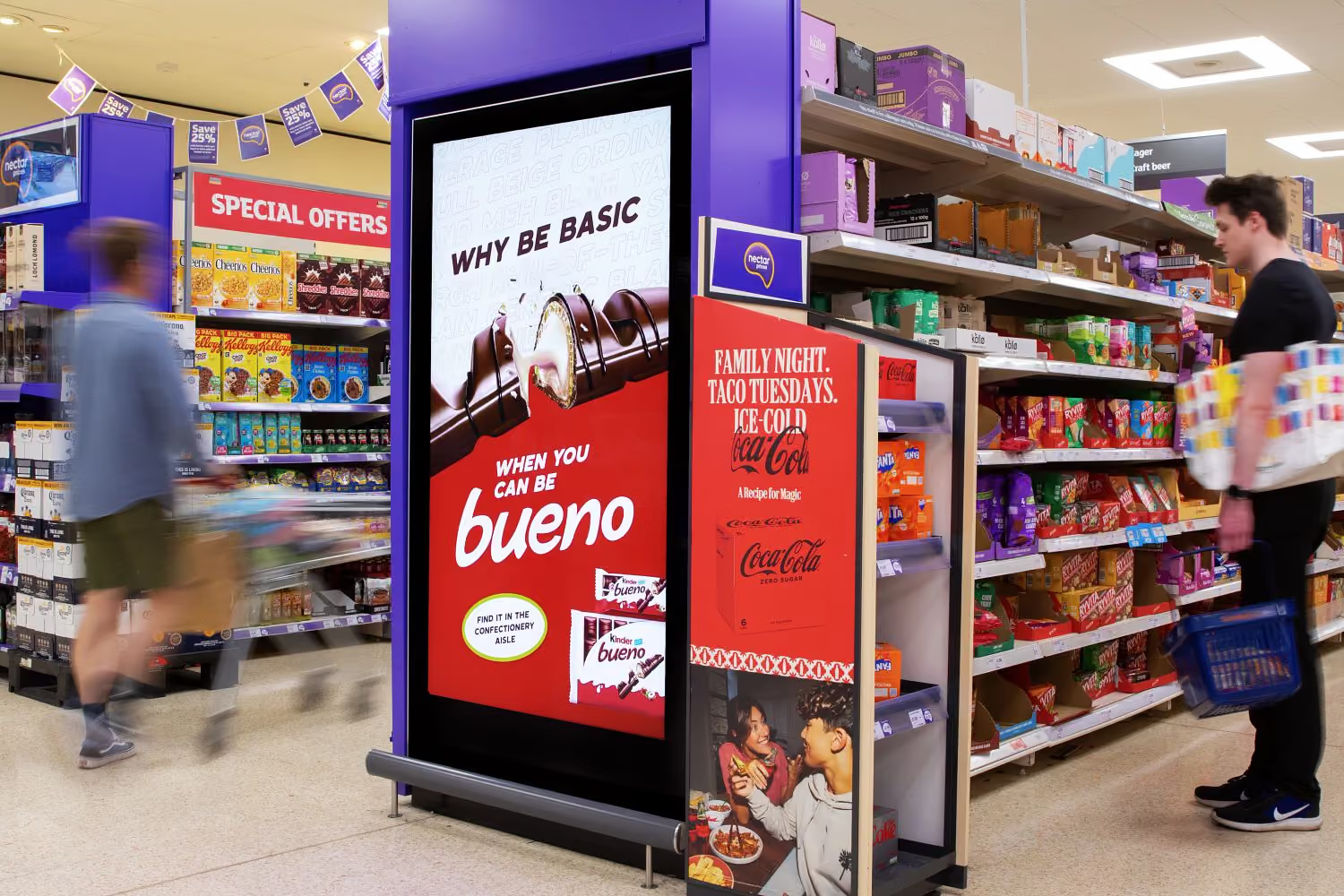
Beyond online
Online Retail Media has transformed how brands connect with consumers, driven by audience targeting, first-party data and closed-loop measurement. But an online-only approach overlooks a key reality: shopping journeys move between digital and physical environments - a consumer might discover a product online, see advertising while travelling, and buy in-store.
Online Retail Media provides precision and measurement. Physical Retail Media provides visibility, context and influence close to purchase. Together, they're more powerful than either channel alone.
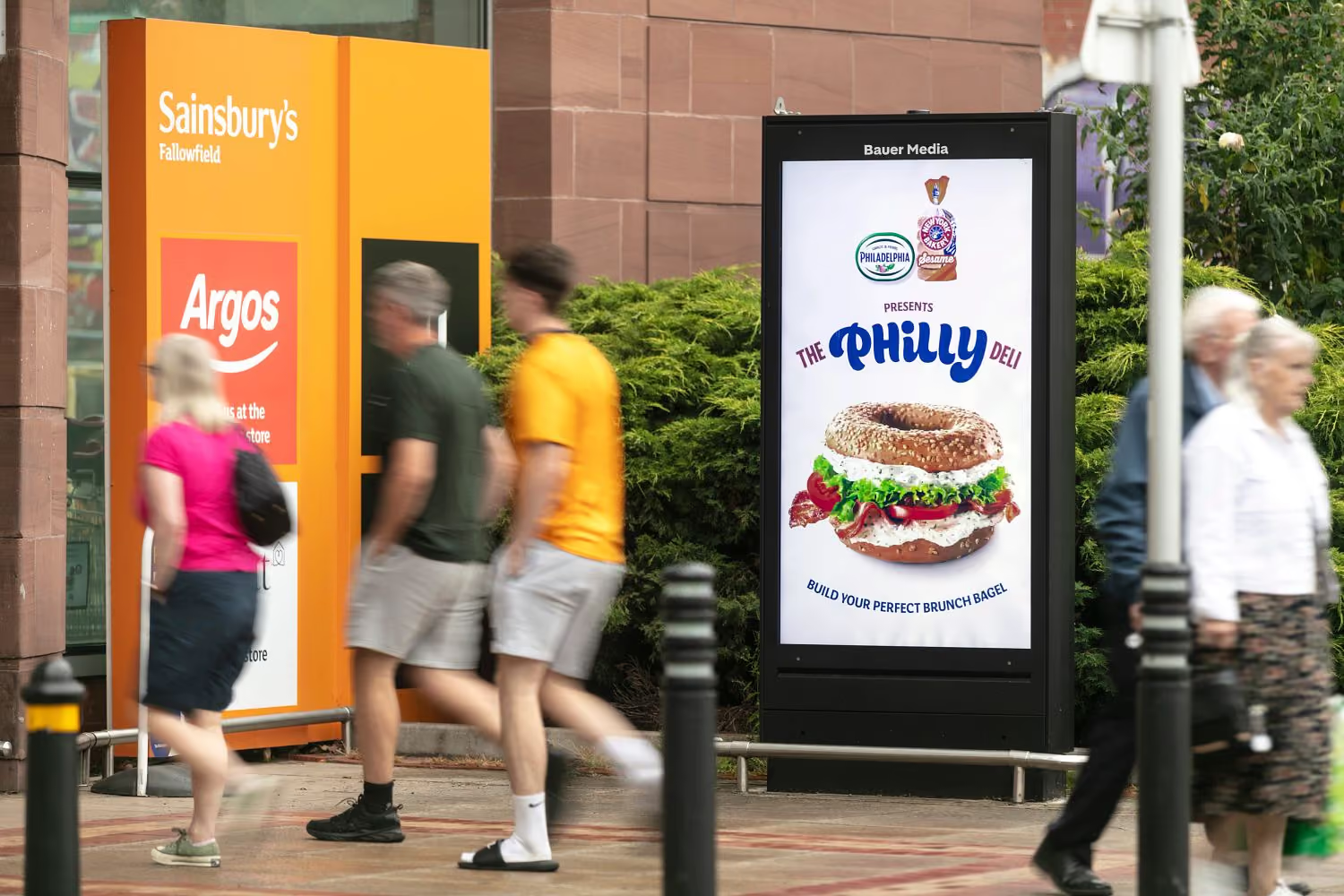
Attention & Intention
Supermarket advertising is often seen as a sales activation channel, but its role is broader. Effective supermarket DOOH campaigns build attention and influence intention at the same time.
By reaching large audiences repeatedly, supermarket advertising builds familiarity and keeps brands mentally available for future purchases. By appearing close to the point of purchase, it reinforces existing preferences and influences decisions while shoppers are actively considering products.
Independent research supports this: exposure to supermarket DOOH delivers 14% faster time to first fixation, 53% higher share of attention on shelf, and a 4.3 percentage point increase in brand choice (Source: Shoppercentric Supermarket Research 2023).
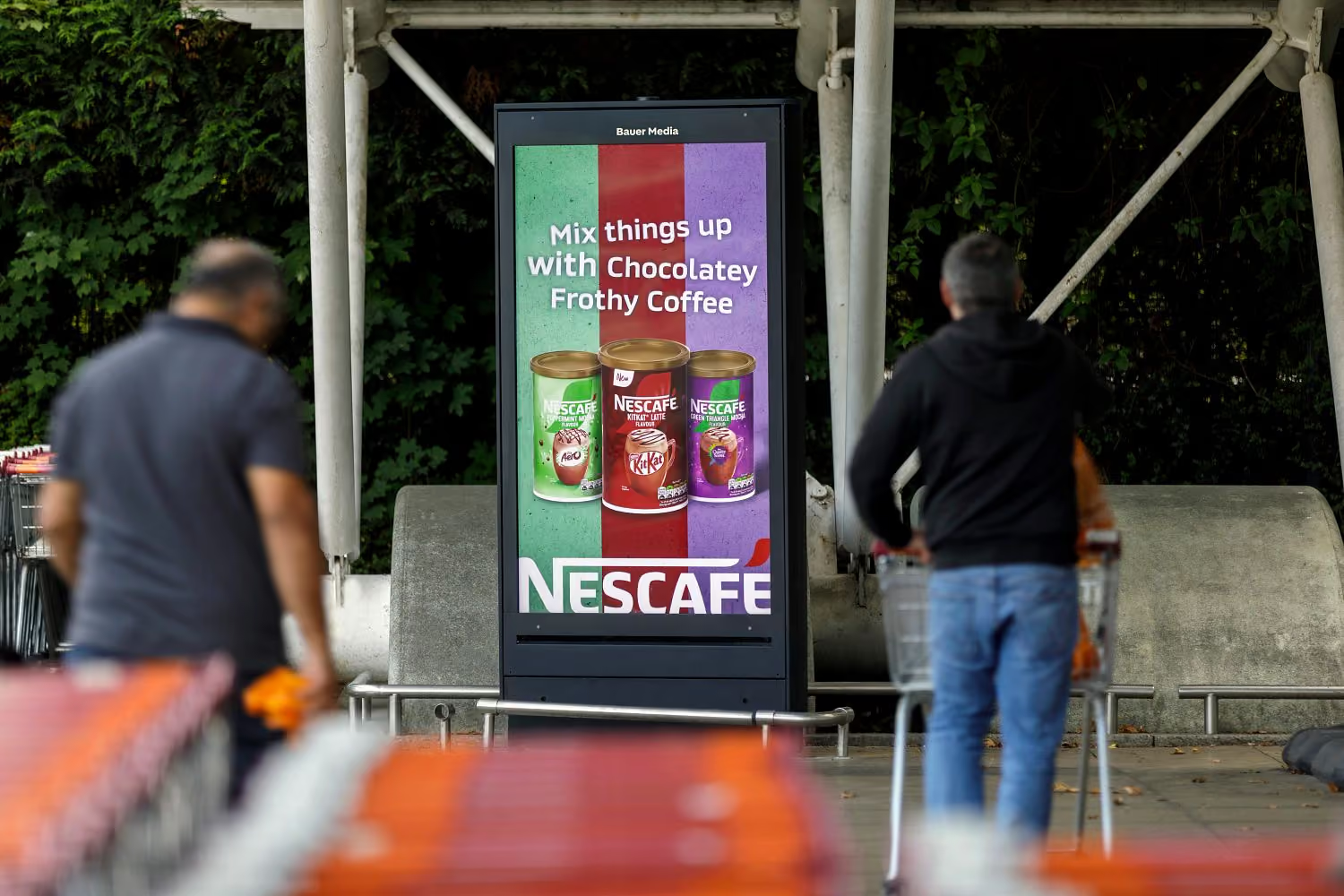
From Streets to Store
The most effective Retail Media campaigns don't begin at the shelf — they begin much earlier. Consumers encounter brands across multiple environments throughout the day, from roadside media to transport and retail destinations, all building familiarity before they enter a store. This is why Streets to Store planning is increasingly important, connecting broader OOH campaigns with supermarket DOOH for a more consistent customer journey.
A shopper might see a roadside campaign during their commute, encounter DOOH near a retail destination, then see a supermarket entrance screen — before purchasing later that day. Each exposure reinforces the next.
How supermarket DOOH supports the full funnel
Supermarket DOOH is effective throughout the marketing funnel. At the awareness stage, it delivers reach at scale among broad audiences. At consideration, creative can reinforce brand benefits, launches and promotions while shoppers remain open to influence. At conversion, proximity to purchase helps reinforce brand choice and support decision-making at the point of sale.
Effectiveness increases further with contextual creative. The Moments of Truth study by Bauer Media Outdoor, JCDecaux and Posterscope found that contextually relevant messaging delivers a 17% uplift in DOOH effectiveness.
This combination of reach and retail influence makes supermarket DOOH particularly valuable for brands balancing long-term brand growth with short-term commercial outcomes.
Let me know if you'd like me to flag the billboard-content mismatch elsewhere in the doc, or if that paragraph was intentional and I've misread the context.
17%
uplift in DOOH effectiveness
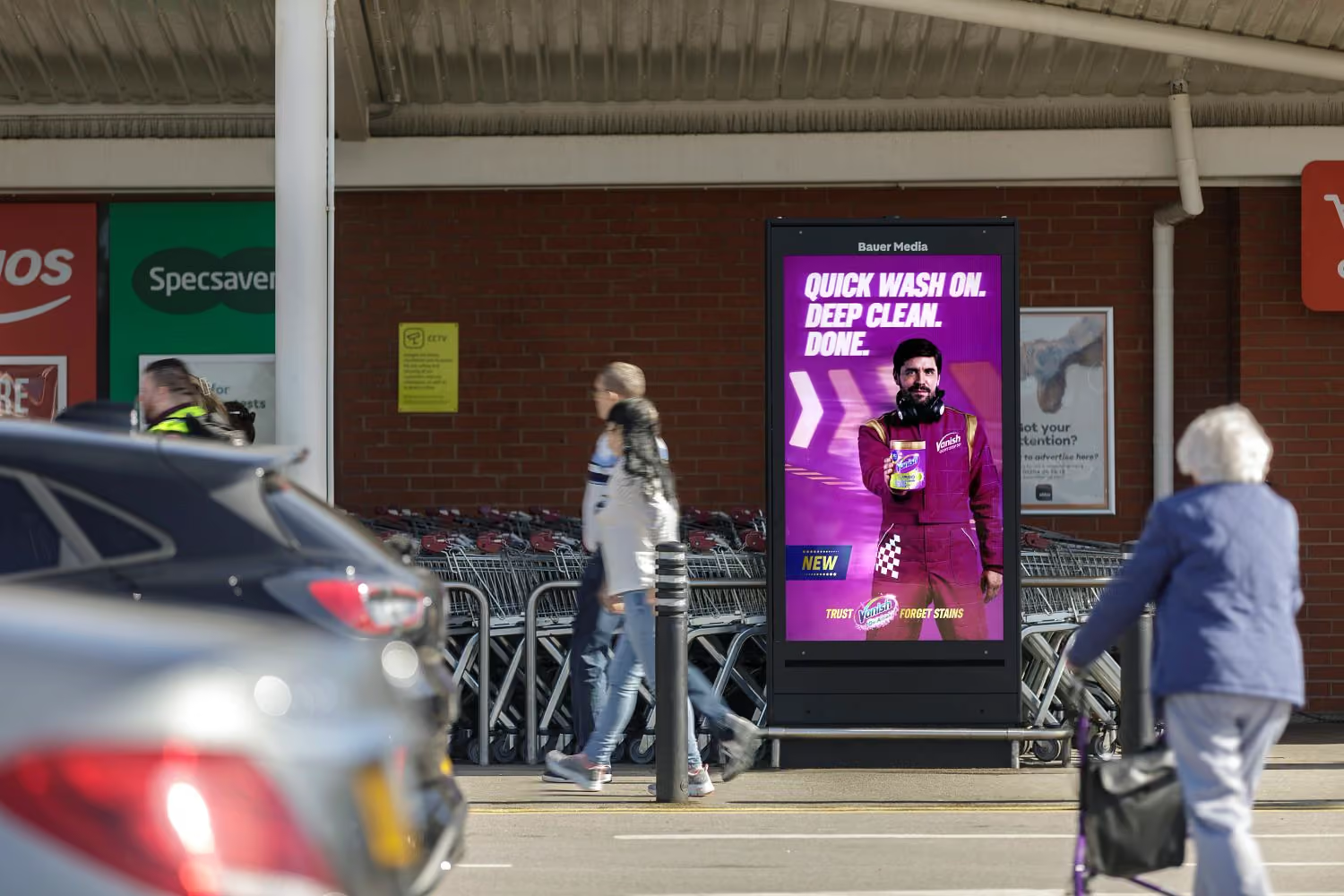
Measuring supermarket advertising
One of the biggest misconceptions about physical Retail Media is that it's hard to measure. In reality, brands can increasingly track:
- Footfall analysis
- Sales uplift studies
- Loyalty card insights
- Audience measurement
- Store-level reporting
- Location-based data
Retail Media is no longer just about impressions - advertisers now expect to understand how it drives awareness, consideration, store visits and sales, making physical Retail Media as accountable as its online counterparts.
Bauer Media Outdoor's supermarket network delivers that scale: 1,500 digital screens across more than 1,100 stores, the UK's largest supermarket DOOH network, reaching 20% of the UK population every fortnight with an estimated 53.6 million fortnightly impacts (Source: Route v57). Across Asda, Sainsbury's and Morrisons, the network spans retailers representing 35.2% of the GB grocery market (Source: Worldpanel by Numerator).
The future of Retail Media goes beyond online
Retail Media will continue to evolve, and online Retail Media channels will remain an important part of the ecosystem. But the future is unlikely to be online alone.
The most effective Retail Media strategies will combine online precision with physical retail influence, connecting online and offline touchpoints throughout the shopper journey. Supermarkets remain one of the few environments where brands can combine reach, attention, context and proximity to purchase within a single channel.
As advertisers continue searching for ways to connect brand building with commercial outcomes, supermarket advertising will play an increasingly important role in the future of Retail Media.
Get in touch
Discover how Retail Media can help your brand reach shoppers from streets to store.