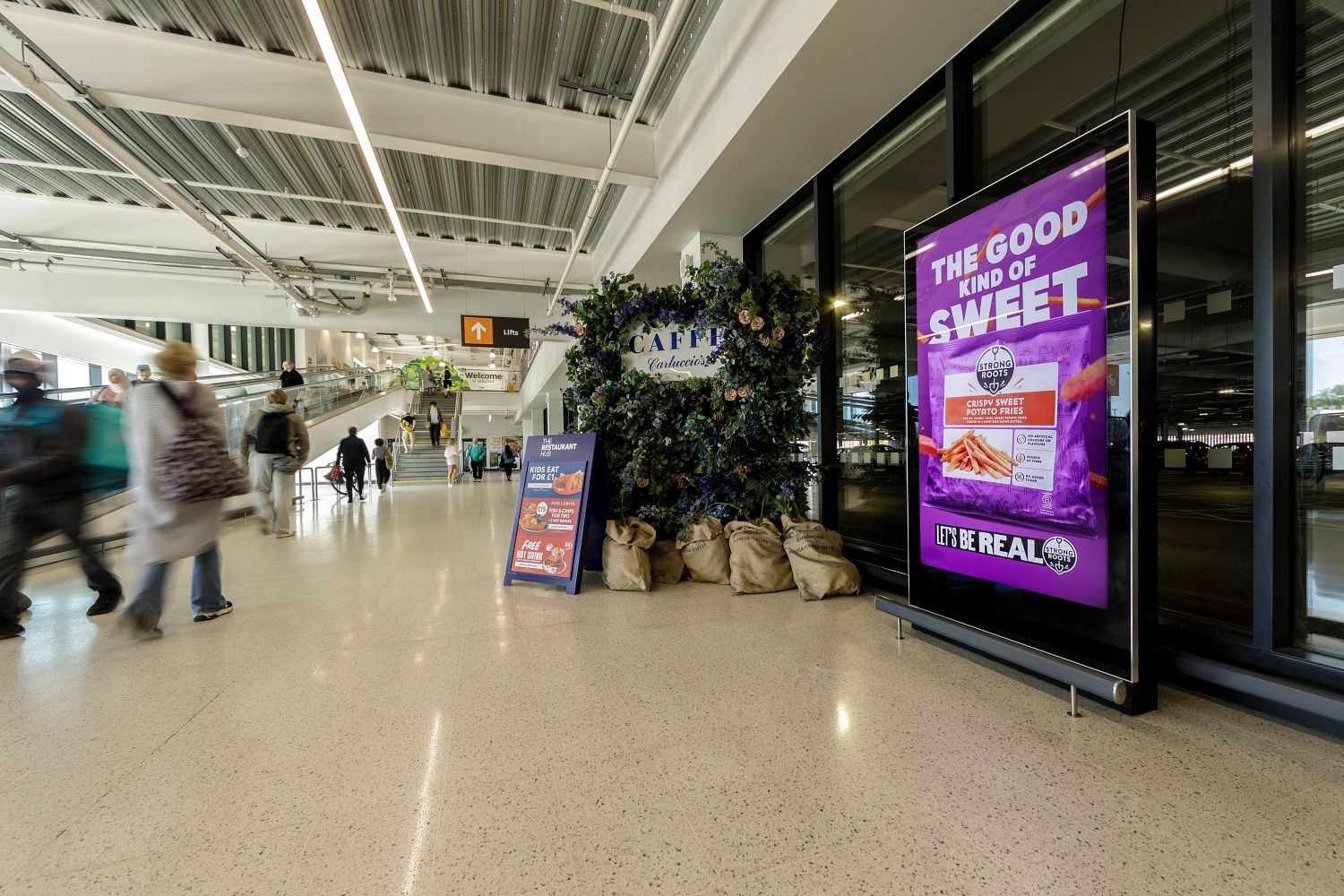
The most effective supermarket advertising doesn't just influence what shoppers buy today. It also helps build the memory structures that influence what they buy tomorrow, next week and next month. This is what makes supermarket Digital Out of Home (DOOH) advertising such a powerful part of the modern Retail Media ecosystem. By combining brand-building reach with proximity to purchase, supermarket DOOH can help brands achieve two objectives simultaneously: build attention and influence intention.
Why supermarkets are unique advertising environments
There are very few environments where brands can reach large audiences with such strong purchase intent.
Supermarkets attract millions of shoppers every week. More importantly, they reach consumers while they are actively making decisions about products, brands and spending.
British households make an average of 17 supermarket trips every month, giving brands frequent opportunities to reinforce messaging and build familiarity over time (Source: Kantar Worldpanel Touchpoints 2025).
Unlike many digital environments, where consumers are multitasking or scrolling quickly through content, supermarkets place brands within the purchasing journey itself.
Shoppers arrive with varying levels of certainty. Some have detailed shopping lists. Others have broad intentions. Many will make decisions as they move through the store.
Research also shows that compared with online grocery shopping, in-store shoppers are:
40% less likely to have a shopping list
3× more likely to deviate from their shopping list
3× more likely to think they can find better deals
3× more likely to switch from their preferred brands
5× more likely to try new brands
3.5× more likely to make impulse purchases
(Source: Toluna Supermarket Study 2023, N=750.)
This creates a valuable opportunity for brands to influence behaviour while shoppers remain open to persuasion.
Attention and intention: the dual role of supermarket advertising
One of the biggest misconceptions about supermarket advertising is that it only drives short-term sales.
Most consumers are not actively in-market for every product category at every moment.
That means brands must remain mentally available when buying occasions eventually arise.
Repeated exposure helps create familiarity, reinforce distinctive brand assets and strengthen memory structures over time.
Supermarket DOOH contributes to this by delivering repeated visibility within high-frequency environments that shoppers visit regularly.
Every exposure helps make a brand easier to recognise, easier to recall and ultimately easier to choose.
Influencing intention
The second role is influencing purchase decisions when shoppers are actively considering products.
Supermarket advertising places brands close to the point where decisions happen.
By reinforcing existing memories and increasing visibility during the shopping journey, brands can improve their chances of being chosen when consumers reach the shelf.
Research from Shoppercentric found that supermarket DOOH delivered a 14% faster time to first fixation, a 53% higher share of attention on shelf, and a 4.3 percentage point increase in brand choice, demonstrating how increased attention can translate into stronger purchase outcomes (Source: Shoppercentric Supermarket Research 2023).
This balance between brand building and sales activation is what makes supermarket advertising so effective.
Why the supermarket entrance matters
One of the most influential moments in a shopping trip happens before consumers reach an aisle.
The supermarket entrance reaches every shopper regardless of their shopping mission.
Unlike aisle-specific advertising, entrance-based supermarket DOOH is not limited to consumers already shopping within a category. Instead, it influences shoppers before category decisions have been made.
This creates two important opportunities:
Prime
Advertising can increase familiarity and consideration before shoppers encounter products on the shelf.
Push
Advertising can encourage shoppers to engage with categories or products they were not originally planning to purchase.
For this reason, supermarket entrance screens have become an increasingly valuable component of Retail Media strategies.
Rather than simply influencing decisions at the shelf, they help shape decisions throughout the entire store visit.
Building brands beyond the aisle
The shopper journey rarely begins at the supermarket door.
Consumers encounter brands throughout the day, across multiple environments and touchpoints.
A shopper may:
See a roadside campaign during their commute
Encounter a DOOH message near a retail destination
Visit a supermarket later that day
See the same brand on a supermarket entrance screen
Purchase the product in-store
Each exposure reinforces the next.
This is why supermarket DOOH is most powerful when viewed as part of a wider Streets to Store strategy rather than a standalone in-store channel.
By connecting broader OOH activity with supermarket environments, brands can create more consistent and memorable customer journeys.
How supermarket DOOH influences purchase decisions
Supermarkets are complex decision-making environments.
Shoppers are surrounded by thousands of products competing for attention. In many categories, consumers are comparing similar products side-by-side.
In these moments, visibility matters.
Familiarity matters.
Mental availability matters.
Advertising that shoppers have seen before entering an aisle can help make products easier to notice and easier to choose.
This is one of the reasons proximity to purchase remains such a valuable characteristic of supermarket advertising.
Rather than interrupting consumers during unrelated activities, supermarket DOOH reaches shoppers while they are actively engaged in shopping.
Retail Media beyond online
Retail Media is often associated with ecommerce advertising, retailer websites and audience targeting.
These channels play an important role.
However, physical Retail Media offers advantages that digital channels cannot always replicate.
Supermarket DOOH combines:
Real-world visibility
Contextual relevance
High shopper attention
Proximity to purchase
Measurable outcomes
Research from the Moments of Truth study by Bauer Media Outdoor, JCDecaux and Posterscope found that contextually relevant DOOH creative delivers a 17% uplift in advertising effectiveness, reinforcing the importance of delivering relevant messages within the shopping environment.
For brands looking to balance performance with long-term growth, physical Retail Media provides an important complement to digital activity.
The most effective Retail Media strategies combine both.
Measuring the impact of supermarket advertising
Modern supermarket advertising is far more measurable than many advertisers assume.
Brands can increasingly evaluate campaign effectiveness through:
Footfall analysis
Sales uplift studies
Audience measurement
Loyalty card insights
Store-level reporting
At the same time, supermarket DOOH retains the flexibility advertisers expect from digital channels.
Creative can be updated dynamically based on factors such as:
Time of day
Promotions
Weather conditions
Seasonal events
This combination of flexibility and accountability is helping drive increased investment in Retail Media and supermarket DOOH.
Connecting brand growth and sales
The strongest supermarket advertising campaigns do not choose between brand building and sales activation.
They do both.
By combining broad reach with proximity to purchase, supermarket DOOH helps brands build awareness, reinforce memory structures and influence decisions closer to the point of sale.
It is this combination of attention and intention that makes supermarket advertising such a valuable part of the modern Retail Media ecosystem.
Looking to connect attention and intention?
Bauer Media Outdoor operates the UK's largest supermarket DOOH network across Asda, Sainsbury's and Morrisons.
Whether you're looking to support a Retail Media strategy, launch a new product or influence shoppers closer to purchase, our supermarket advertising solutions help brands connect attention and intention at one of the most influential moments in the shopper journey.
Get in touch to learn more.
Contact us
Start advertising your business today
Out of Home is a tried and trusted method for reaching large and diverse audiences and the new wave of DOOH formats has expanded our network's offering - enabling you to amplify your brand's message with data-driven campaigns.
Our position as market leaders ensures that we can provide expert guidance on choosing the right formats, locations and environments to deliver tangible results. Fill out the form to start your OOH advertising journey with Bauer Media Outdoor.
Similar guides
Explore more Out of Home advertising guides and content.
How supermarket advertising drives brand and sales
For many advertisers, supermarket advertising is viewed primarily as a sales activation channel.
The assumption is simple: reach shoppers close to the shelf, influence a purchase, drive a sale.