


Out of Home advertising explained
Often referred to as simply OOH, Out of Home advertising is the collective term for any adverts found outside the home. Billboards, bus shelter posters and checkout advertising all fall into this category.
OOH’s upward trajectory is stronger than ever following a challenging period of popularity during 2020, when the public were under stay-at-home orders.
With digital innovations in the sector providing new formats, intelligent targeting and more agility, OOH is now an integral part of any future-facing marketing strategy.
But before you can implement it effectively, you have to understand how OOH works and what it can offer.
What is Out of Home advertising?
Out of Home advertising (OOH) is the name for any advertising encountered outside of the home, excluding adverts viewed on a mobile phone or other personal devices.
There are multiple OOH formats spanning everything from traditional 6-sheet posters to interactive digital screens. When digital is involved, the acronym DOOH is normally used instead.

Everything you need to know about OOH advertising
New to Out of Home advertising? Discover how OOH and DOOH campaigns help brands build awareness, reach audiences at scale and create memorable advertising experiences across real-world environments.




Types of OOH advertising
There are four main categories of OOH advertising:
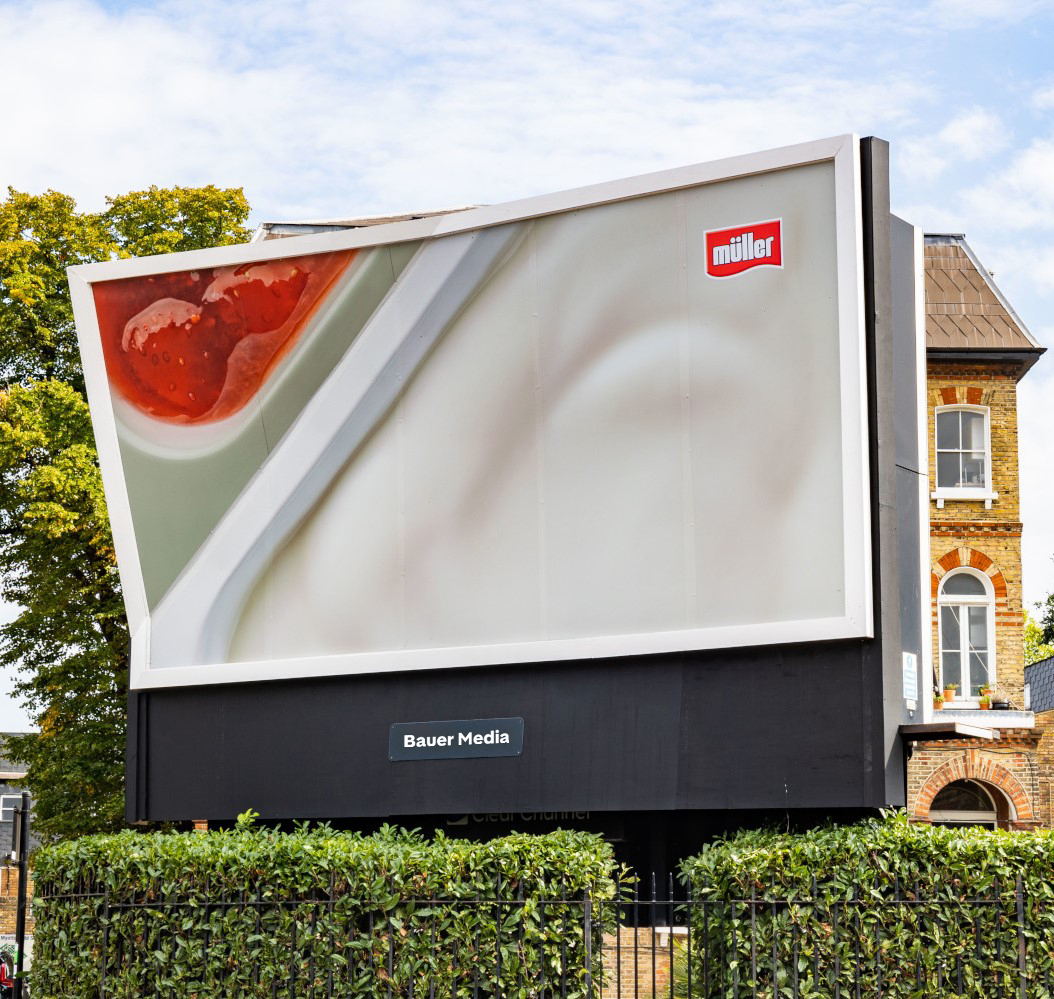
- Billboards – e.g. motorway billboards, digital billboards
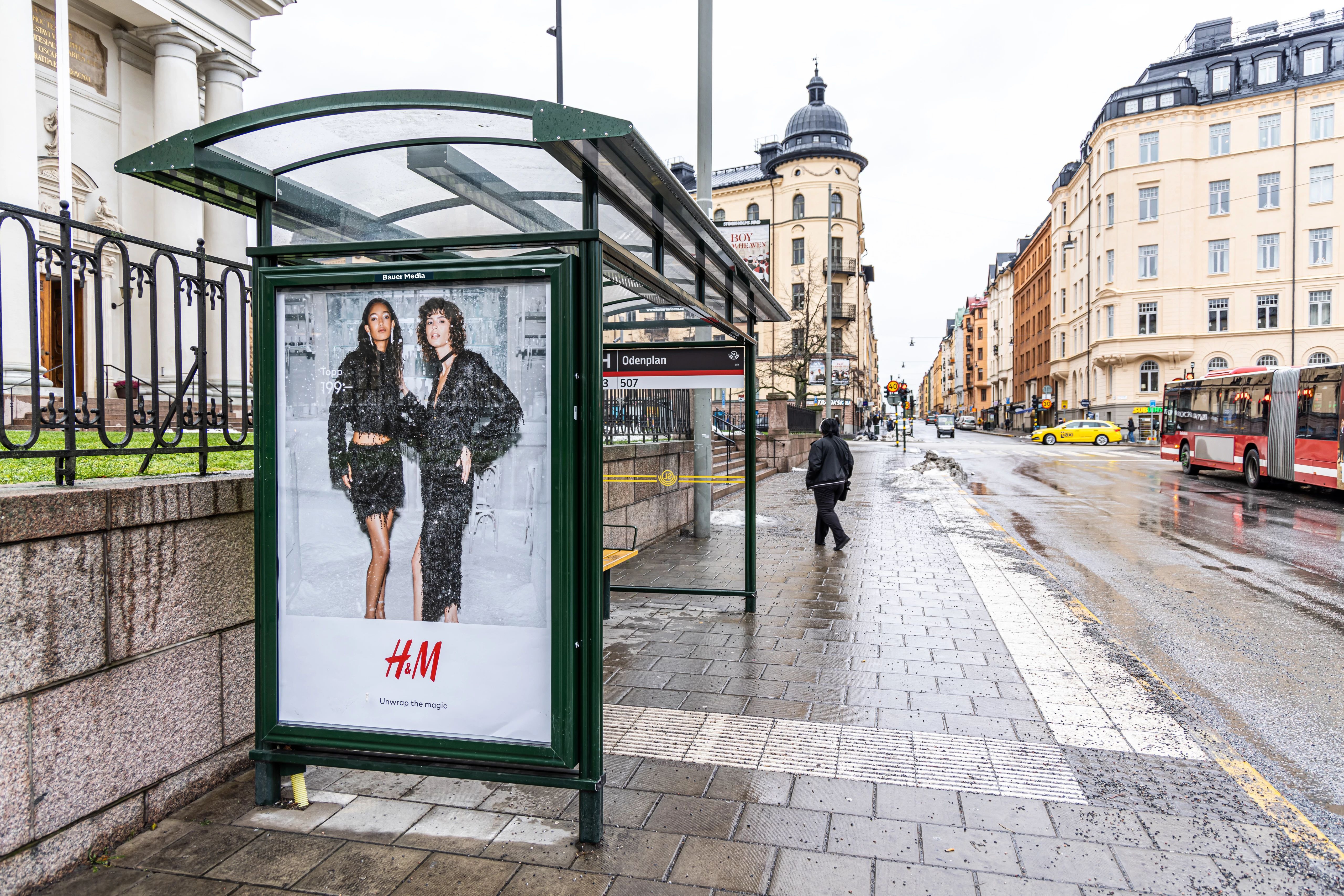
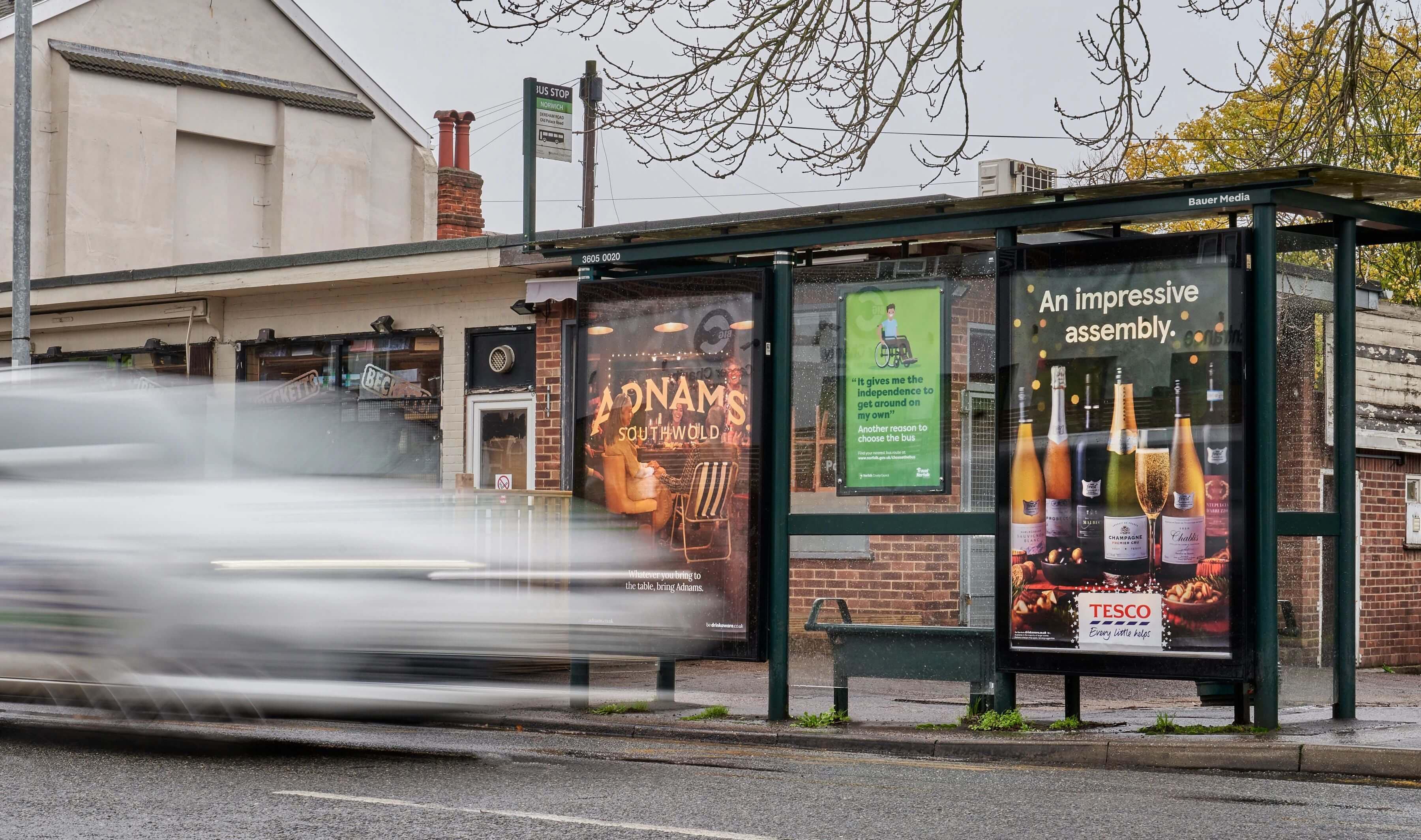
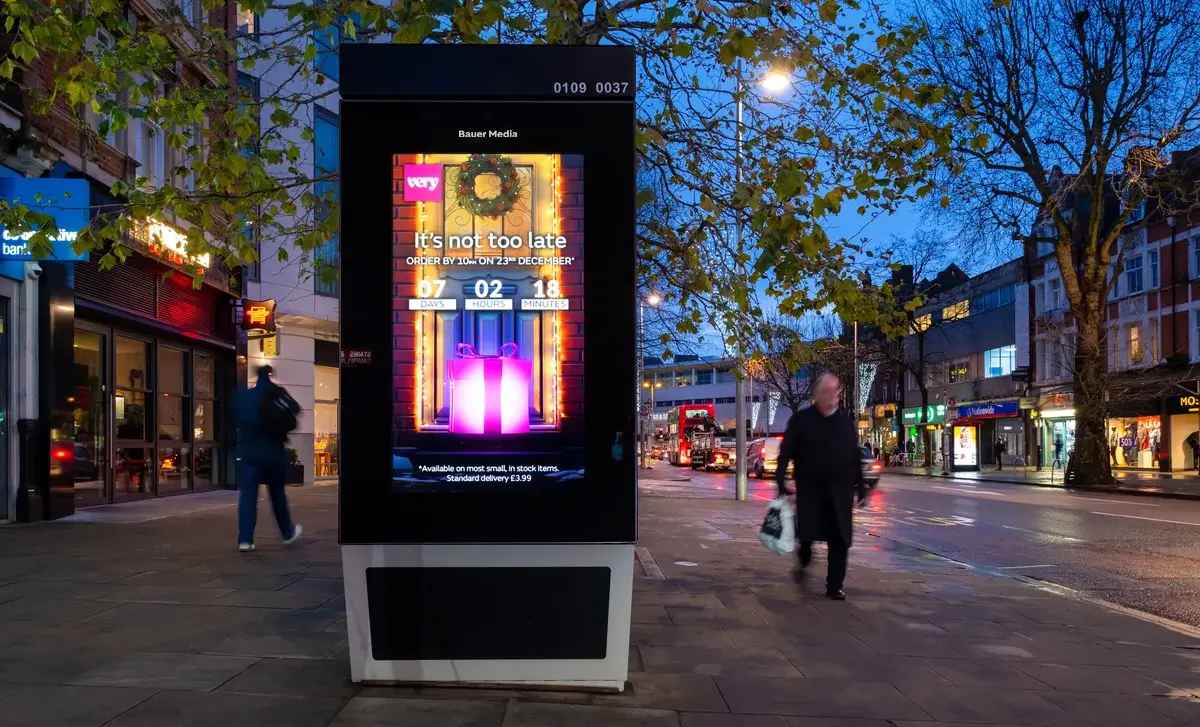
- Street furniture – e.g. bus shelters, telephone booths, pavement screens
- Transit – e.g. side of bus or taxi, railway carriages, airports
- Place-based – e.g. shopping centres, events
- Retail– e.g. supermarkets, shopping centres, malls
How Out of Home advertising works
Out of Home advertising works by placing a brand’s ads in front of potential customers while they are going to work, running errands and generally going about their everyday life. The locations and environments in which these ads are shown are selected based on unique campaign goals and audience criteria.
Consumers are desensitised to online advertising and TV/radio ads, due to the frequency at which exposure occurs.
OOH, on the other hand, puts brands in front of people in situations where they are not constantly being bombarded by other ads, making it easier for the creative to cut through.
Through the strategic placement of an eye-catching creative with focused messaging, OOH allows advertisers to fulfill their goals – whether that means reaching a new audience or reinforcing the messaging of a wider campaign.
The benefits of OOH
OOH advertising can be successfully incorporated into marketing activity at all levels, from full-scale national brand campaigns to local lead-gen efforts. The benefits are so much more than just brand awareness, including:
1. High volume impressions
The considered placement of OOH screens and billboards targets high-traffic areas specifically. Depending on the exact location and how much inventory is used, there is the potential to get your brand in front of millions of eyes.
2. Collective influence
Influence is heightened when working with a large network of inventory. Creative use of inventory items across an area means greater success in activating customers as opposed to tiring them out.
3. Drive online activity
The space between online and offline media is getting smaller, with OOH playing a key role in pulling the two together. OOH advertising boosts online engagement more than any other form of offline media, acting as the cornerstone of an omnichannel marketing strategy.
4. Flexibility
With an abundance of formats and locations to choose from, programmatic buying options and the ability to schedule and contextualise content, DOOH provides marketers with the flexibility to build a highly targeted campaign that can be adapted as performance data builds. Pretty impressive for a medium that, not so long ago, was considered impossible to track.
5. Cheap and effective
OOH is one of the cheapest forms of advertising. This is why so many advertisers turn to OOH – not just to run new campaigns, but also to amplify existing marketing efforts.
6. Stand out
Most marketing might now take place online but between ad blockers and ad-heavy web pages, it’s getting harder to stand out. OOH allows for creative innovation and evades online saturation to deliver tangible results.
Getting the most from Out of Home
Before kicking off your OOH campaign, there are a few considerations to get right:
- Know your audience and KPIs
- Make sure the location fits your goals
- Remember programmatic is your friend
- Opt for an eye-catching creative
- Take advantage of omnichannel benefits
- Don’t forget to measure the impact
We can help you decide how to best use OOH media to meet your goals. To learn more about our inventory, audience targeting and suite of measurement tools, get in touch with the team.
Start your OOH campaign today
Interested in learning more about OOH advertising? Fill in our form and one of our team will be in contact shortly to answer your questions and get started on your next campaign.