

OOH vs DOOH advertising explained
Choosing between traditional Out of Home and Digital Out of Home comes down to delivery method – and each offers its own unique benefits depending on your campaign goals.

We break down what OOH and DOOH advertising are, how they differ, and the key advantages of each to help you decide which is right for your next campaign.
Businesses looking to advertise outdoors have two options – traditional Out of Home (OOH) advertising or the new generation of outdoor advertising known as Digital Out of Home (DOOH).
Each has its own unique benefits, with the main difference being the delivery method. Some situations call for OOH media, while others are most suited to DOOH.
To help you decide which is right for you, let’s take a look at what OOH advertising is, what DOOH advertising is, and what the key differences between the two are.

OOH advertising is the abbreviated form of Out of Home advertising, which is used to describe advertising that takes place outside the home. This can include billboards, bus shelter ads and posters on the side of buildings.
Out of Home is one of the most enduring forms of marketing. As far back as ancient Egypt, market sellers were advertising their products on outdoor signage.
These days, OOH is a lot more refined. The medium has evolved to offer a variety of formats, locations and advanced targeting options.
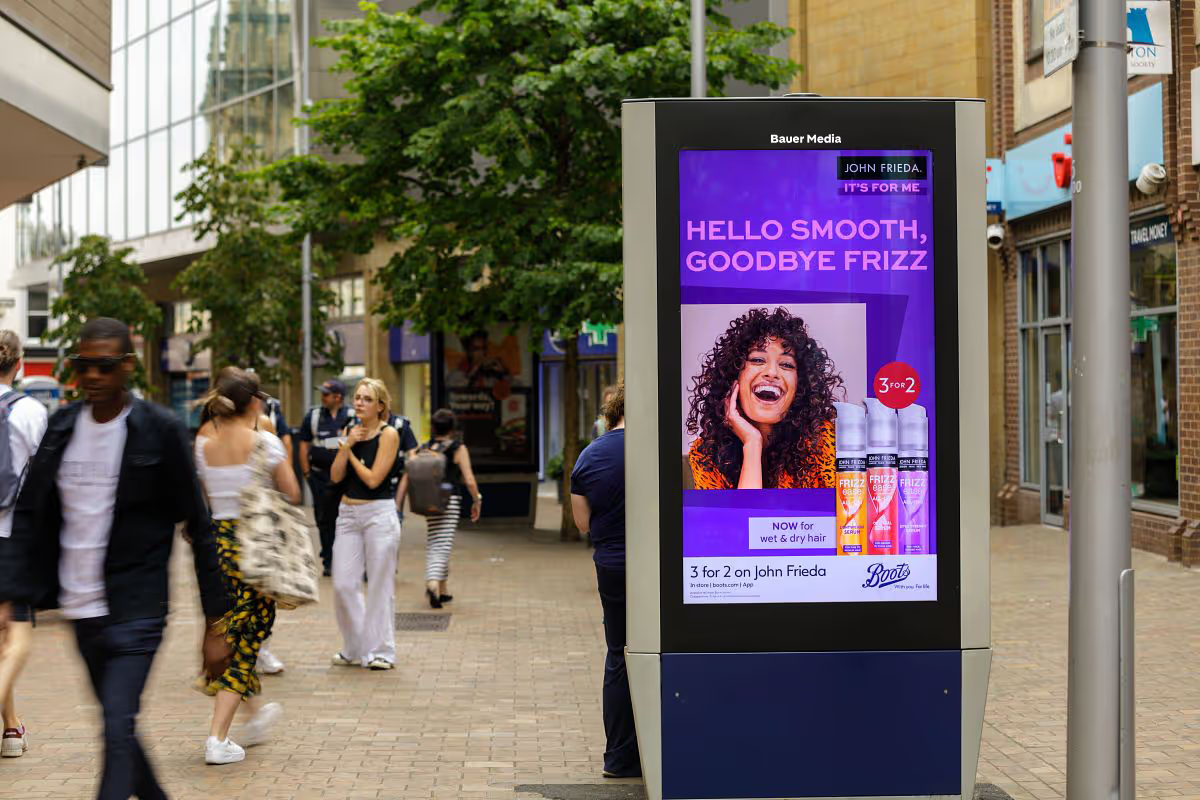
DOOH advertising is the abbreviated form of Digital Out of Home advertising. The premise of DOOH is the same as OOH but the advertising is presented through digital infrastructure. Display panels in shopping centres and digital street signage are examples of DOOH formats.
The emergence of DOOH has revolutionised the Out of Home industry, bringing greater flexibility, increased measurement and new creative options.
What’s the difference between OOH and DOOH?
OOH and DOOH share a lot of key features but there are also some distinct differences between the two mediums:
OOH vs DOOH: Which one is better?
Both OOH and DOOH have unique benefits and use cases, meaning there’s no generic answer to which one is better than the other. It’s a subjective question that requires application to a specific circumstance.
To get a better idea of whether OOH or DOOH is better for you, consider the following advantages of each one.
Extreme audience segmentation isn’t always the right approach. If you want to make a bold brand statement or start a wider public conversation, you need to make sure that everyone sees the same advert.
OOH is old school, which means it’s been tried and tested over time and is ingrained in the public psyche. This adds credibility and indicates trust – dodgy companies don’t tend to expose themselves with massive attention-grabbing billboards.
The static nature of OOH can be a benefit in itself. When the same people pass the same advert every day, it leaves more of a lasting impression, thus improving brand recognition and awareness.
DOOH enables hyper-targeting, where advertisers don’t just target based on location but can also vary their messaging depending on the time of day. This type of dynamic advertising is used to drive contextual relevance, which is proven to have an uplift on campaign effectiveness.
Programmatic DOOH provides more flexibility for advertisers. Campaigns can be adapted in real-time, without having to send an expert out to tear down the poster and start again.
Both OOH and DOOH can be interactive to some degree but DOOH definitely comes out on top. Digital panels make features such as touchscreens and inbuilt cameras possible, opening up a new world of interactivity.
For all their differences, OOH and DOOH also share some similarities. Both can direct the audience toward a purchase point, whether through a website URL or directions to a physical location.
Both allow advertisers to amplify their reach by moving the journey online – by including a QR code to their social media page, for example. And behind-the-scenes digital innovations like advanced audience intelligence can be utilised by both.
To take the next steps in your Out of Home journey, speak to one of our experts by getting in touch.
Looking to discuss outdoor advertising in your local area? Please give us a call or fill in our form and we will get back to you shortly.