Outdoor ads play passenger on UK eventgoers’ journeys
This new research explores how UK audiences travel for live events and the role Out of Home advertising plays along the way. From commuting routes to city centres and entertainment hotspots, the study reveals how brands can connect with eventgoers at key moments throughout their journeys.
If you’ve attended a concert, sporting fixture or festival in the past year, you’ve been part of an important crowd on a national scale. Events such as these happen all across the country, and many Brits are willing to prioritise their free time and spending in order to be able to attend them.
In this report we’ll look at the data from Bauer Media Outdoor’s most recent survey, analysing the ways in which live events are keeping Britain active and inspired, and the advertising opportunities that brands can capitalise on along the way.
Events as an economic engine
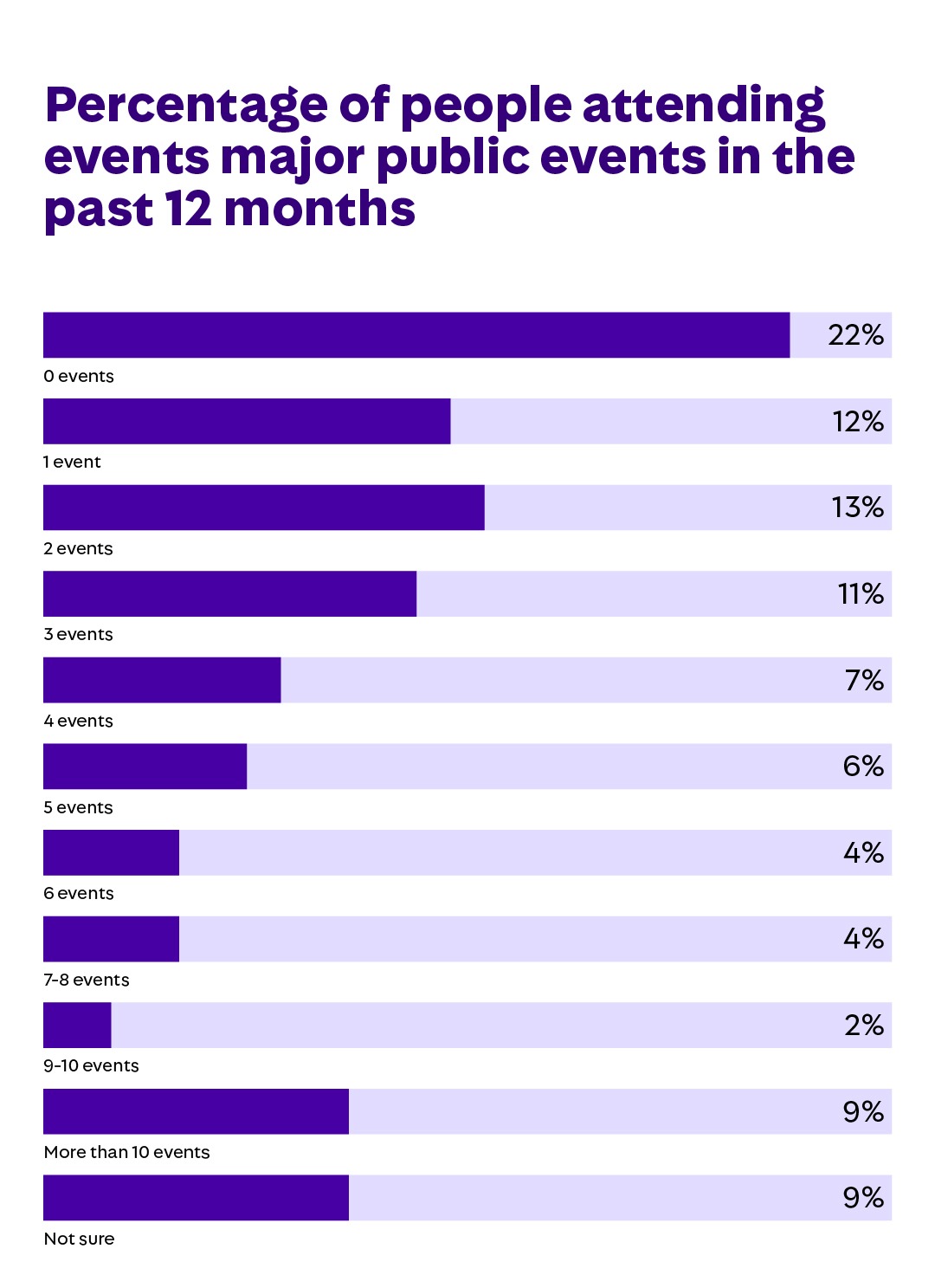
Far from just entertainment, events drive travel, spending, and regional economic activity across the UK. A tenth of survey respondents have attended at least 2-3 events in the past 12 months, and nearly 10% reported attending 10 or more events in the same time period.
It’s likely that sports fans are responsible for those higher numbers – research from the Football Supporters Association show that the majority of football fans will attend a minimum of 15 home games a year, and at least one away game, the latter of which could easily take them to the other side of the country.
This shows the way in which events such as these can impact domestic tourism; and, more than just the occasional treat, sometimes play a major role in avid fans’ lives.
The UK’s growing appetite for live events
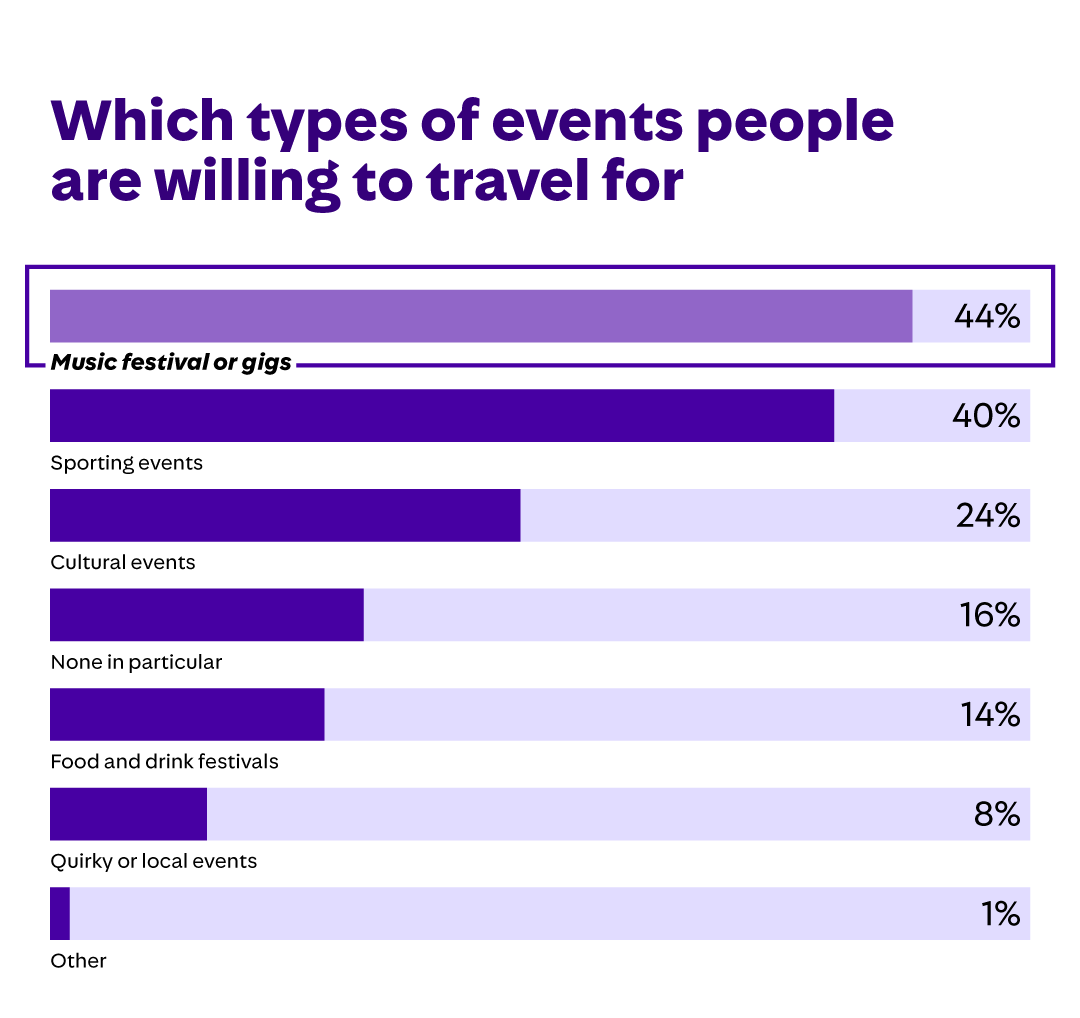
Nearly half of survey respondents (44%) said they’re willing to travel for music and gigs, with 40% saying the same for sporting events, and nearly a quarter (24%) for cultural events such as regional festivals. The majority of respondents said they’ve travelled to another part of the UK for the sole purpose of attending some kind of live event.
This makes sense when you consider that travel spending has grown consistently since spring 2021, right alongside entertainment spend. When looking at these figures combined, it suggests that experiential spending is still important to Brits, even in a time when they may be having to cut down in other areas.
Live events move the nation (literally)
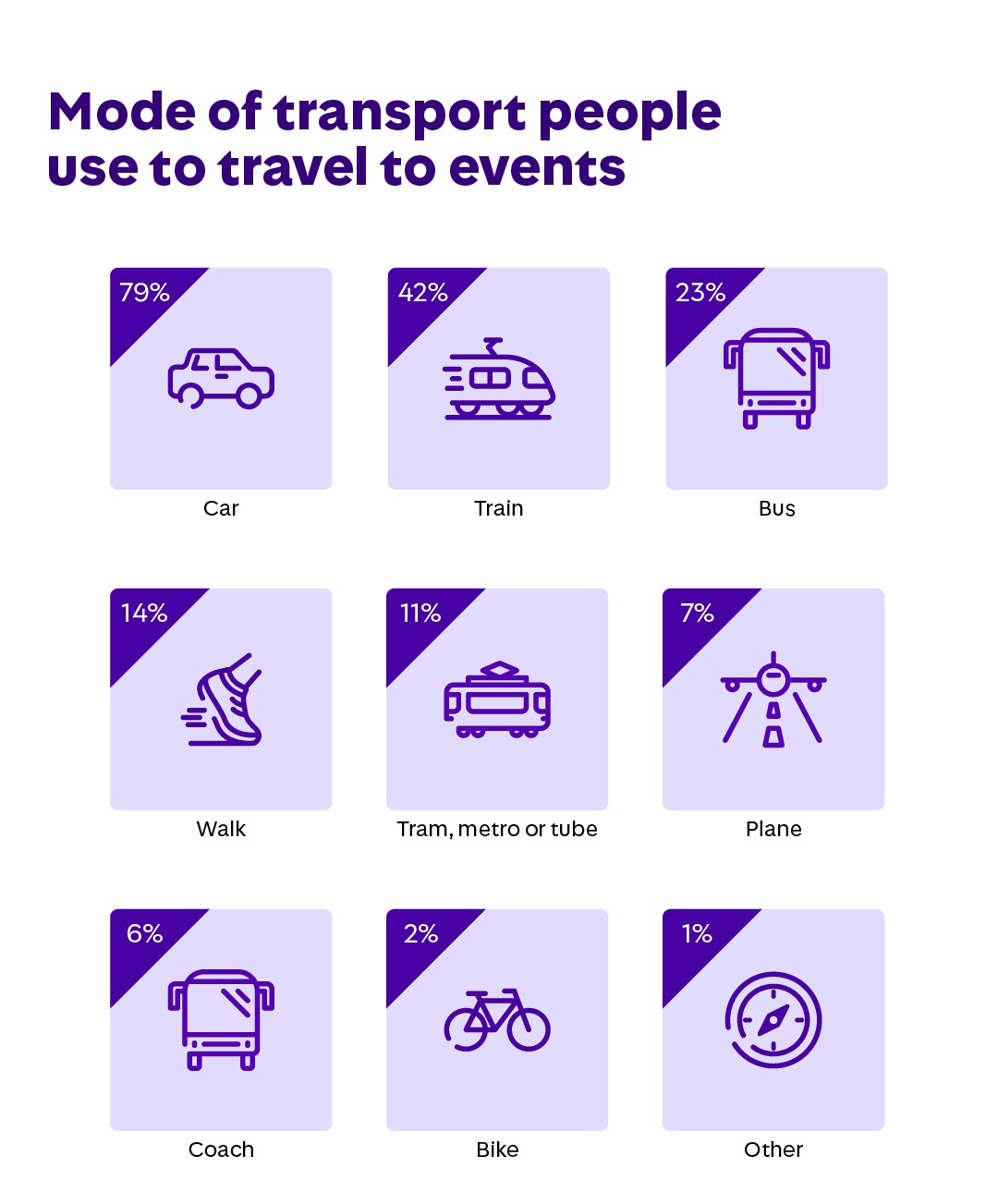
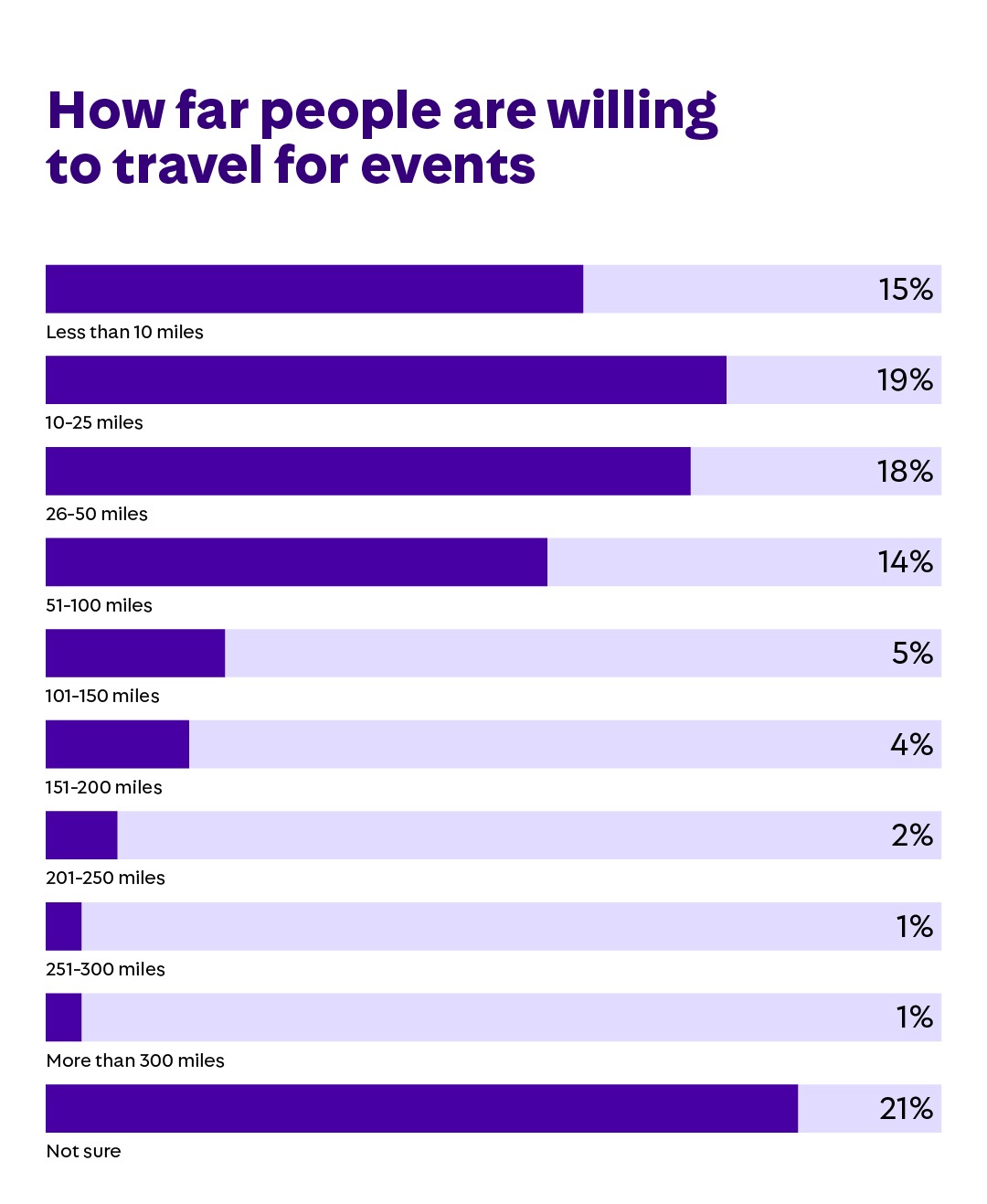
Cars are by far the most popular kind of transport when it comes to attending events (79%), with trains (42%) and buses (23%) coming in second and third at quite a noticeable distance. Nearly a fifth of respondents would travel as far as 50 miles from home in order to attend an event – the equivalent of travelling from Manchester to Leeds by car.
Event-based spending patterns
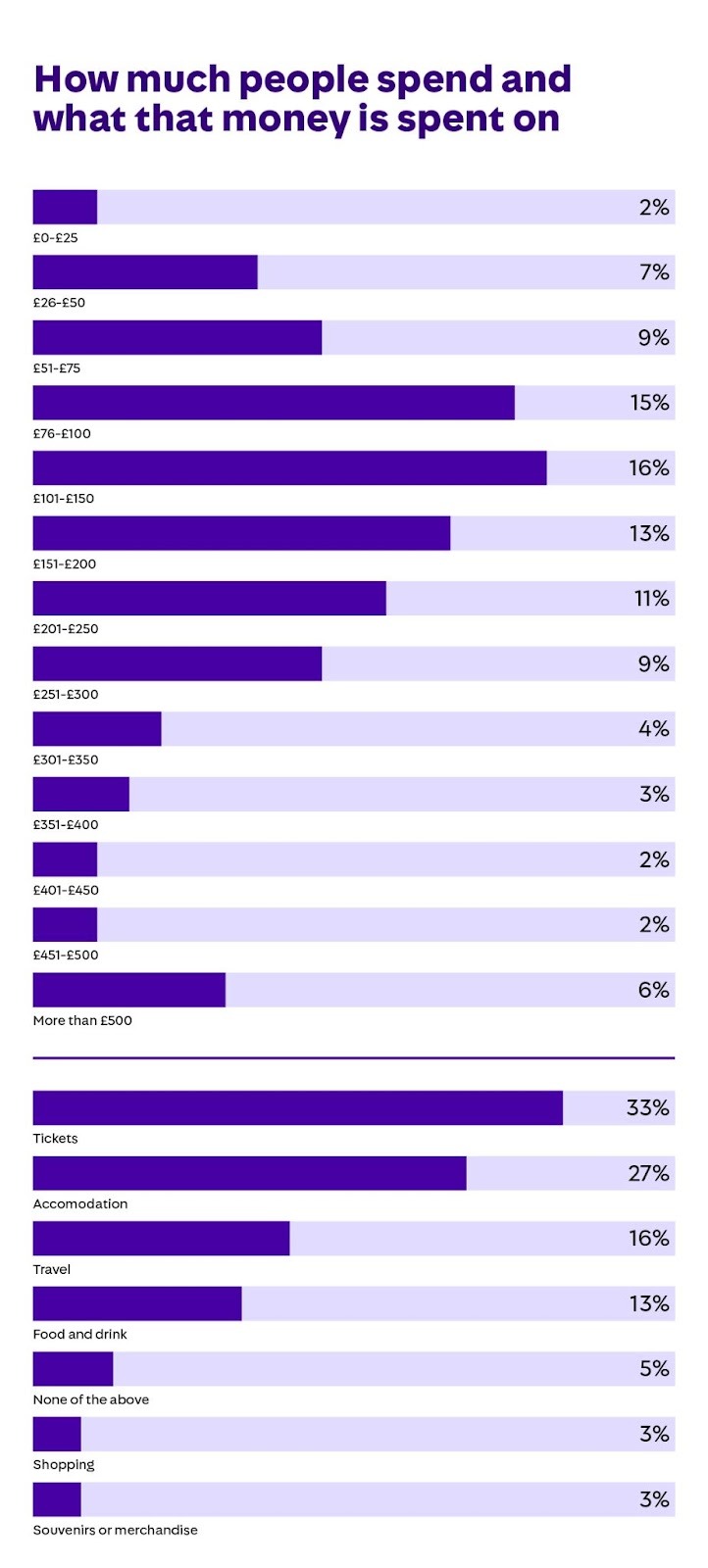
These journeys are significant from an economic perspective. Most eventgoers reported spending between £50 and £300 per event – the most common answer was between £101-£150 (16%) – while a particularly enthusiastic 6% said they would spend more than £500. The bulk of this spending goes on tickets, accommodation and travel, rather than merchandise or souvenirs, pointing to what could be described as “short but intense” bursts of experiential spending.
Rather than spreading budgets across long-term purchases, consumers are concentrating their spend around the moment itself. Considering that tickets and accommodation are often booked well in advance, it may be easier for consumers to justify this kind of intense spending – as by the time the event itself rolls around, the initial payment will be a distant memory.
It’s no secret that the hospitality industry is known to capitalise on experiential spending such as this through dynamic pricing, with nearby room prices increasing by over 150% in response to Taylor Swift’s Eras Tour hitting the UK in 2024. When considering the footfall, dwell time and major routes travelled by concert-goers, it’s not surprising that Out of Home (OOH) ads get a fair share of attention along the way.
The ever-present travel companion
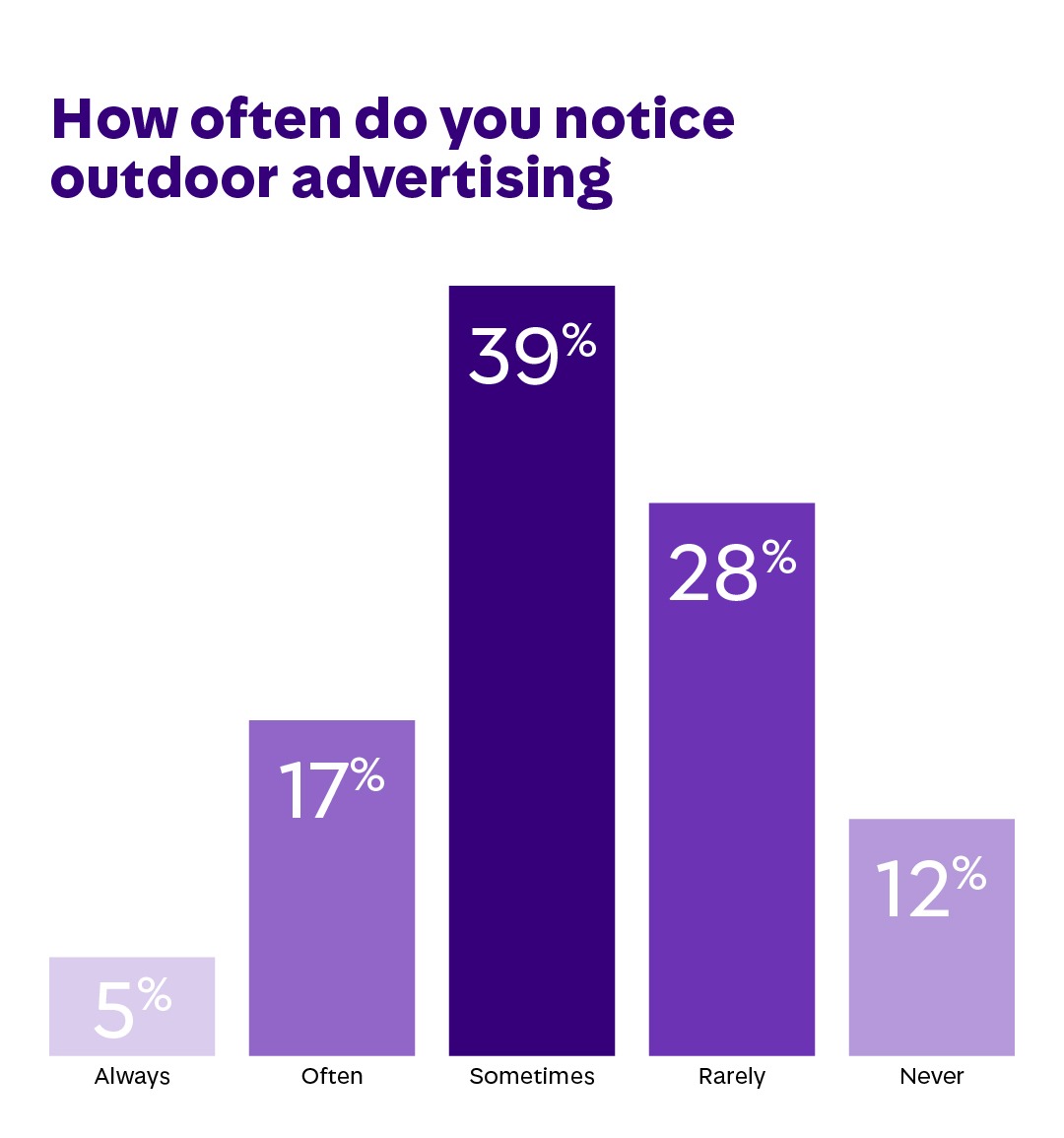
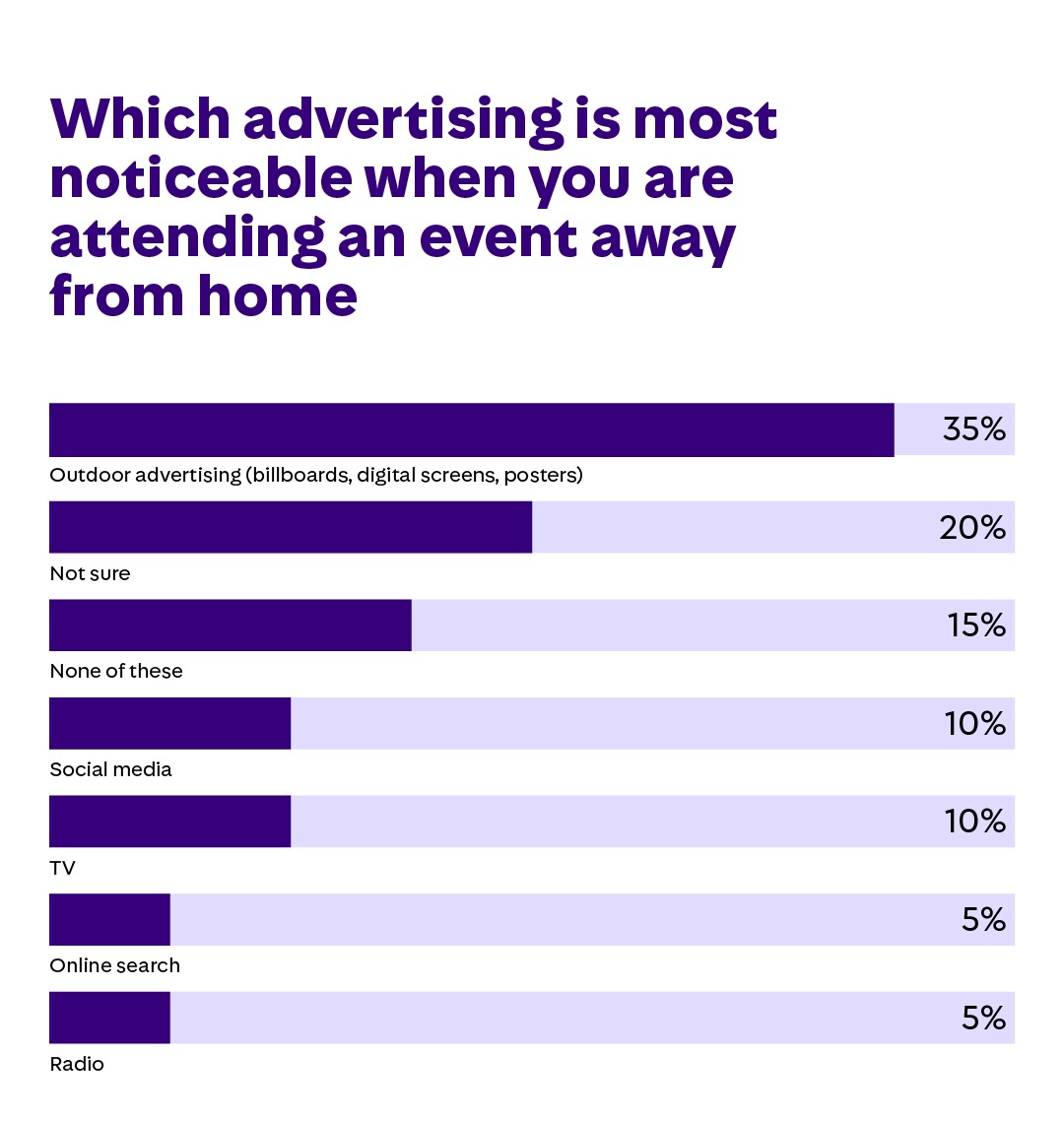
Almost 40% of people said they remembered noticing OOH advertising when travelling to a major public event – and although 60% haven’t (knowingly) acted on what has been advertised to them, that simple visibility is still essential to building trust and engagement. OOH is easily the best at grabbing experiential tourist attention – it polled as the most noticeable (35%) and also the most relevant (23%), outshining both social media (13%) and online search (8%) combined.
The psychological element of interactive OOH, such as the kind programmed to reflect the events they’re embellishing, is proven to be great for brand recall and customer loyalty.
But it’s not just about how easily OOH is seen – it also seems that the right OOH ads can amplify the buzz around live events. A third of tourists agreed that OOH “adds to the atmosphere and excitement of attending a major show.” Reactive visuals and colourful creative can provide an illuminating backdrop that demands to be noticed, especially at a time when consumers will be trying their hardest to not look down at their own small screens.
Opportunities lie beyond London
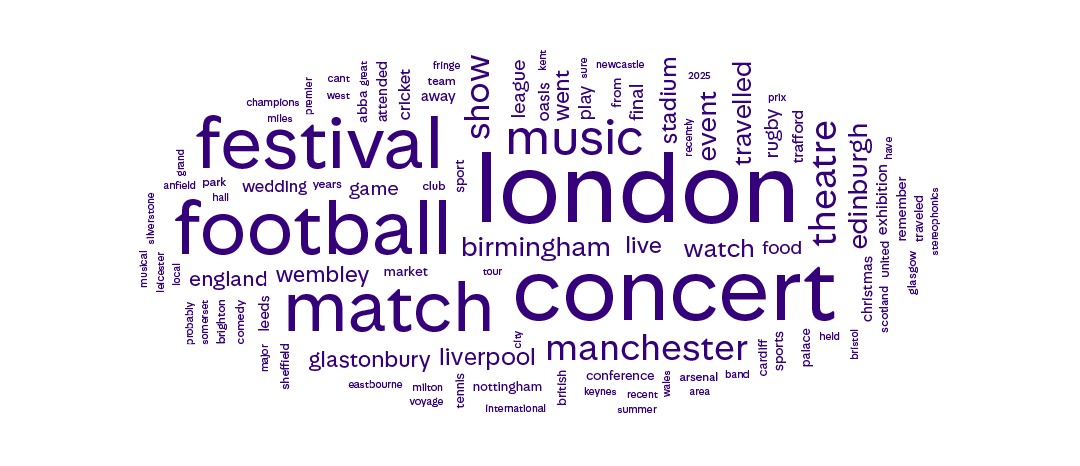
Despite the nationwide appetite for events, the research also highlights a clear geographical – and perhaps cultural – imbalance. London is thought of as dominating the UK’s event landscape, with respondents voting the capital as the best place for experiential tourism – and there does certainly seem to be pressure to travel. More than 1 in 10 (13%) event-goers from the North East typically travel over 100 miles to attend a major public event. It makes sense, then, that a third (31%) of survey respondents from the North East spend more on accommodation than anything else (including tickets) when attending events.
But, despite their willingness to travel, 36% of event-goers from the North East think that their home region offers the best experiences and events for visitors and tourists, placing the North East above every other option on the poll – including London.
The regional opportunity for advertisers
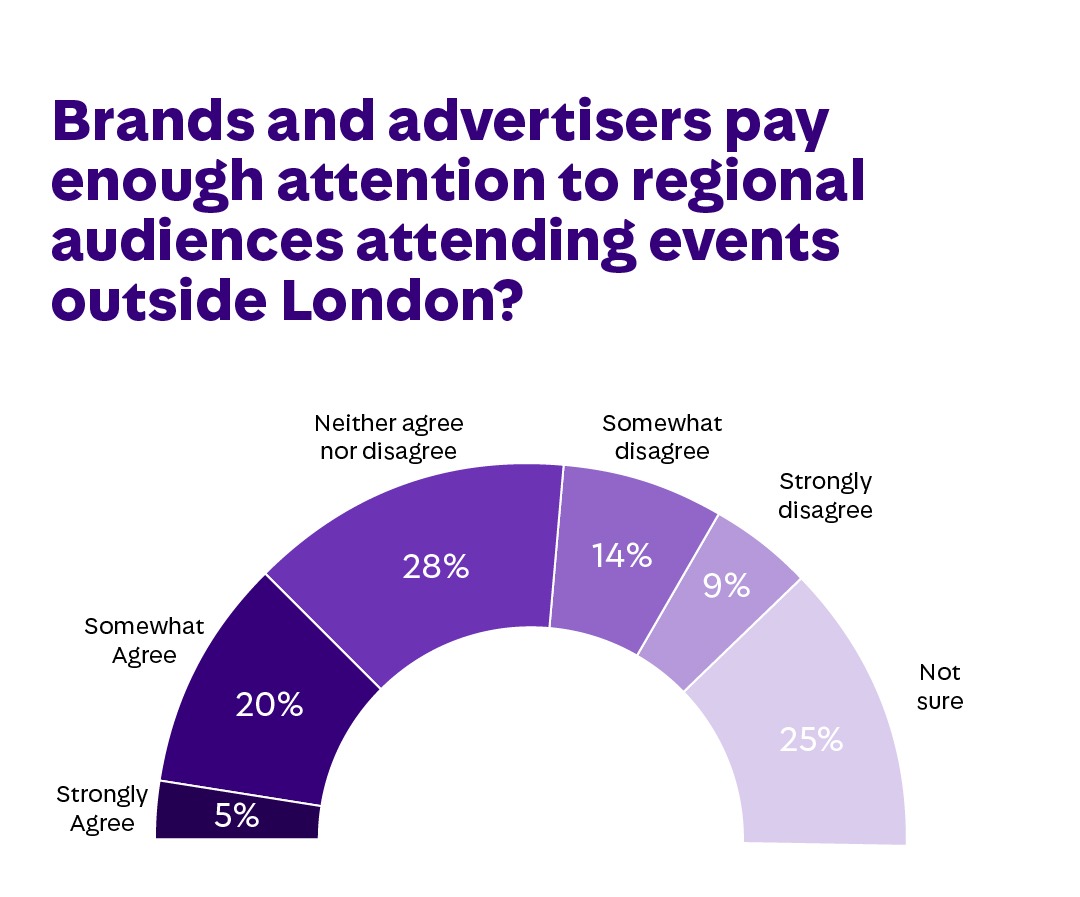
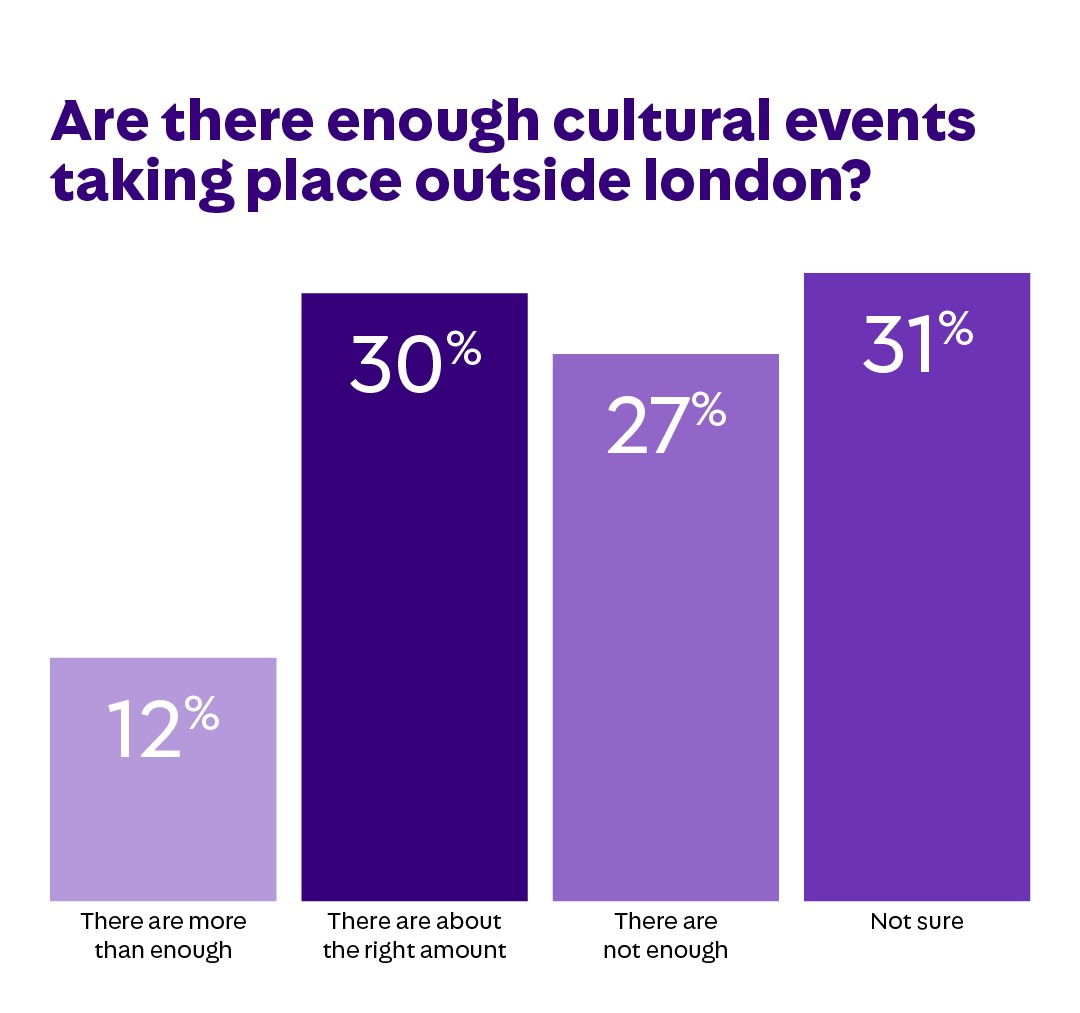
Event discovery remains relatively low beyond the capital, and the opinion on how much attention brands and advertisers pay to regional areas seems to be divided. This gap represents an opportunity not just for event organisers, but for advertisers to support and amplify regional events – helping to drive awareness, footfall and economic activity outside the traditional hotspots.
As survey results in the previous section suggest, people are proud of their regional and local events, and people outside of the stereotypical entertainment hubs are travelling to them and spending their money. Brands should be capitalising on this hometown pride, and encouraging people to explore.
The experience economy
Taken together, the findings paint a picture of a UK economy increasingly fuelled by experiences. Live events are encouraging people to travel further, spend decisively, and engage with the world beyond their handheld screens. As audiences move through major roadways, stations and city centres en route to these magical moments, outdoor advertising is uniquely positioned to travel with them; visible, relevant and embedded in the real-world excitement of the journey itself.
As Britain continues to prioritise experiences over possessions, the path to the main stage, stadium or festival gate may be just as important as the event itself. For advertisers, that journey could provide a well of untapped potential. Get in touch with the experts at Bauer Media Outdoor to find out more about OOH opportunities.
Britain steps outside: how active lifestyles are thriving despite economic pressure
In a country where household budgets remain under pressure and people are increasingly prioritising how they spend their time and money, new research commissioned by Bauer Media Outdoor shows that active lifestyles are becoming a bigger part of everyday life. From early morning run clubs to the rise of padel, people are finding more ways to get active and socialise, with 38.5% of UK adults now spending more time outdoors than they did a year ago.
Solihull Station welcomes new interactive wayfinding unit
Bauer Media Outdoor UK and Solihull Council partner to deliver Solihull's new wayfinding unit, supporting easier navigation around the borough while creating new opportunities to promote local businesses, services and visitor destinations.






.jpg)