


Rethinking Supermarket DOOH in the age of Retail Media
Colin Horan, FMCG Strategy Partner, explores retail media strategy and makes the case for a bigger role for supermarket DOOH in the media mix.
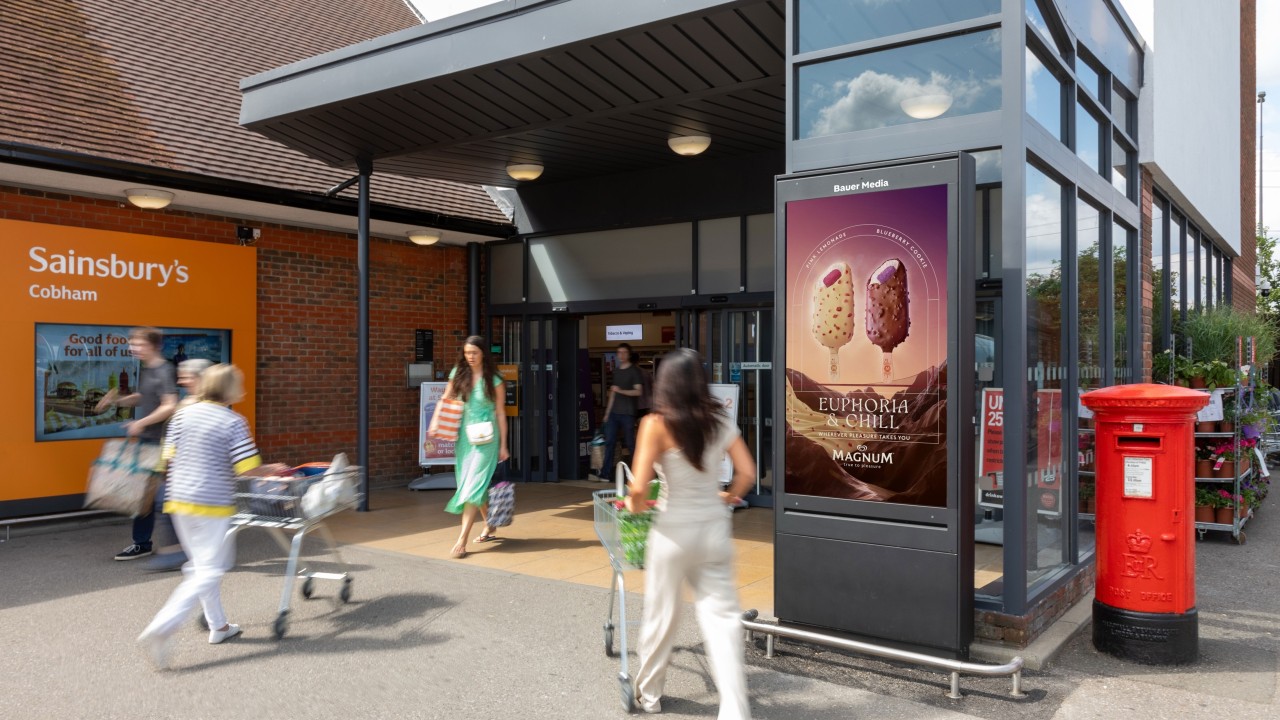
If you work in media right now, you can't move for the words "Retail Media." It's become an industry buzzword - splashed across conference agendas, and increasingly commanding client conversations. The numbers are hard to ignore. Global retail media spend has, by some projections, now overtaken total TV investment. That's an impressive milestone. But context, as always, is everything.
Look a little closer and you'll find that this boom is almost exclusively an online story. And around half of all global retail media spend flows to just two players: Amazon and Alibaba. It's a duopoly dressed up as a revolution.
For those of us in grocery, the picture looks rather different. While the industry has been busy falling in love with digital retail media, British shoppers have largely been getting in their cars, grabbing a shopping bag, and heading to the supermarket, just like they always have. Our own research shows that only 8% of UK grocery shoppers shop exclusively online. Meanwhile, 55% shop exclusively in-store. The supermarket is still very much where grocery shopping happens.
So it’s no surprise that we’re seeing growth in digital media in physical stores, particularly Supermarket DOOH. Digital screens are becoming part of the fabric of the retail environment. For example, we're growing our network to 1,500 screens this year, with the addition of Morrisons bringing 300 new screens to store entrances, complementing our existing presence across Asda and Sainsbury's. The supermarket estate is becoming a genuinely significant digital media channel. But it’s also a media environment that’s often misunderstood.
We talk about supermarkets as if they exist in a separate universe from the rest of media planning. So often, they get siloed into below-the-line budgets, handed off to the sales team, and kept well away from brand conversations. Yet, according to Touchpoints data, on an average day, 59% of the UK population will visit some type of supermarket. For context, that’s higher than the workplace (54%). Supermarkets aren't just transactional touchpoints, they are high-attention environments that are part of our daily life, and a crucial part of the OOH landscape. By treating them as something separate, we’re underestimating their true potential. Perhaps their role needs a rethink, and there are a few important factors to consider:
There are a number of distinct differences between in-store and online behaviour. People don't go to a supermarket the same way they shop on online. Online grocery shopping is functional, task-oriented, and list-driven. But walking into a physical store is an experience. Shoppers browse, they explore. They're much more open to being influenced. In fact, in-store shoppers are 40% less likely to have a shopping list, three times more likely to deviate from one if they do, and 3.5 times more likely to make an impulse purchase.
The supermarket is a busy environment that puts shoppers under a high cognitive load. The sheer volume of decisions a shopper faces in a single visit means that rational, considered choice-making quickly goes out of the window. Instead, we default to what feels familiar - the brand we recognise, the pack we've seen before. Familiarity, it turns out, is doing a lot of heavy lifting in the aisle.
But not all shopping missions are the same. Shoppers rarely cover every aisle, or buy from every category. In fact, on average 70% of store visits will result in no spend in any given category. So waiting for someone to reach a particular shelf before trying to influence them is a risky strategy, because there's every chance they were never going there in the first place. The net needs to be cast wider, and earlier. That's what makes the store entrance such a valuable moment. It's the one place everyone passes through, regardless of their mission. It helps prime those already heading for your category and pushes others into an aisle they hadn’t planned to visit.

Most retail media - particularly online - is built around efficiency. Hyper-targeted, one-to-one messages served to people who are actively in-market, close to a purchase decision. It's a compelling proposition, and it works. But it's also, by design, a narrow one.
Supermarket DOOH operates on a different principle. Those screens at the store entrance aren't filtering for in-market buyers - they're reaching everyone who walks through the door. Light buyers and heavy buyers. Those who came for a specific brand and those who've barely thought about the category. It’s far from being a weakness, that's precisely the point.
Because whilst some of those shoppers will make a decision today, many others are the household decision-makers who'll be back next week, and the week after that. Every exposure builds and refreshes the memory structures that determine which brand feels familiar when the moment of choice eventually arrives. Influencing in-aisle decisions matters, but consistently reaching those buyers consistently over time shapes longer-term brand preference.
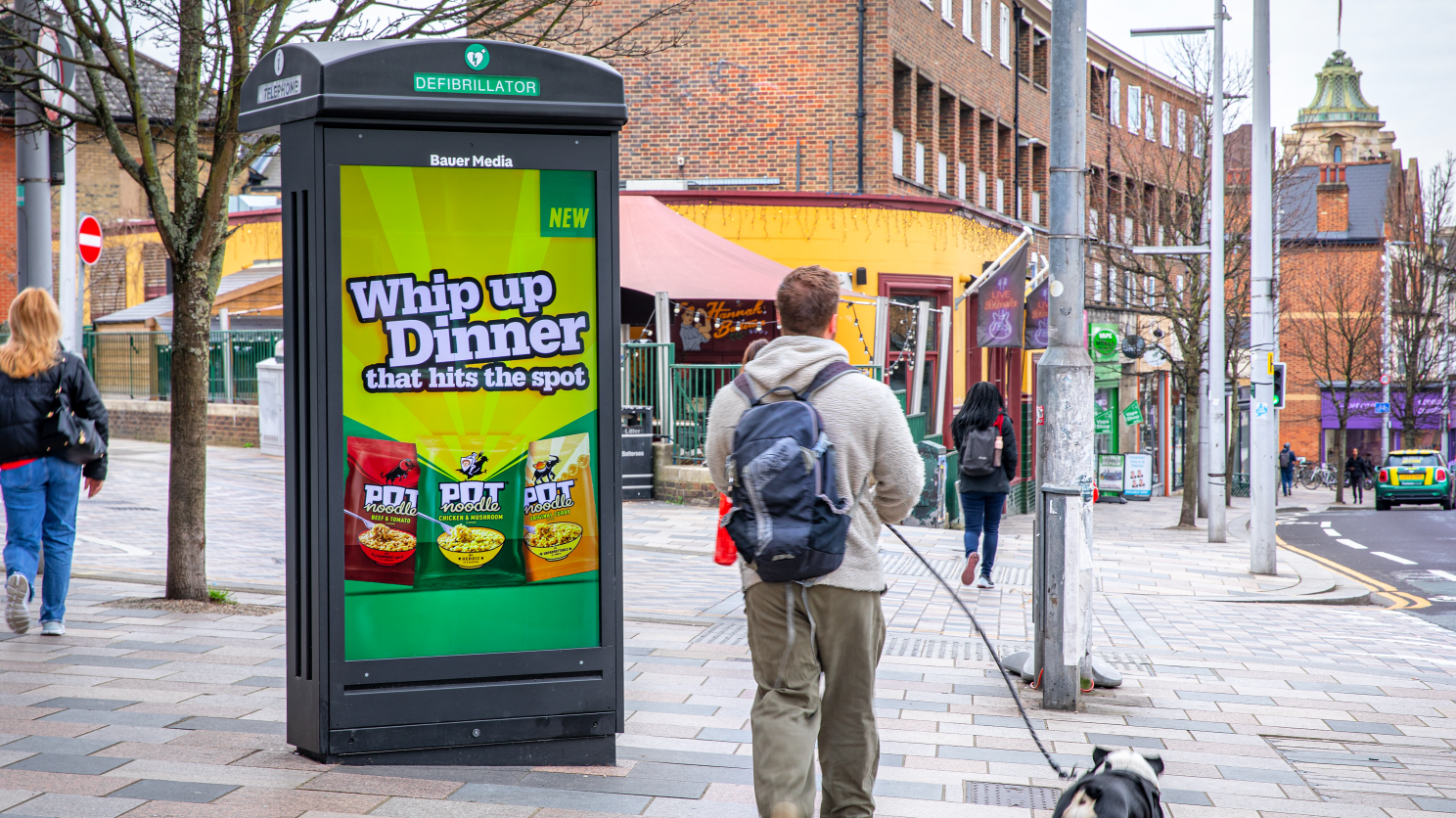
And those screens at the supermarket entrance are a powerful brand builder. We know that, because they're the very same format as the screens you see across the wider DOOH landscape - on the high street, at roadside, in stations, and at shopping malls. Supermarket DOOH isn't a trade channel dressed up as media. It's a proven brand-building format that happens to sit in a retail context. It’s reach and retail, and one of the few formats that can genuinely do both jobs at once.

The ability to build brands and basket spend is a strong proposition for Supermarket DOOH on its own. But it becomes significantly more powerful when planned as part of a wider OOH strategy, rather than in silo.
For FMCGs, OOH is increasingly doing multiple jobs across the consumer journey - from streets to store. Building fame, driving product relevance, and influencing decisions close to the point of purchase. Supermarket DOOH sits at the sharp end of that journey, but when planned together, the effects are supercharged.
Formats like Adshel Live - the UK's largest DOOH network - are a natural complement, with thousands of screens nationwide offering mass reach and retail proximity. A shopper who's already encountered your campaign before visiting the shops arrives at the store entrance already familiar with the brand.
Beyond reach, DOOH gives brands the flexibility to deliver the right message at the right moment - building memory structures by aligning contextual messages with relevant category entry points, while also capitalising on the sales opportunity when consumers are most likely to be in market. A brand looking to build associations with BBQ occasions, for example, can deliver weather-triggered messaging on warm summer weekends, reinforcing the associated memory structure and capitalising on the short-term sales moment.
A connected OOH plan gives advertisers the reach, the contextual relevance, and the proximity to influence decisions at the point of purchase. Planning supermarkets as part of that, not instead of it, is key.
The retail media conversation isn't going away. If anything, it'll get louder. But as the industry continues to chase the next digital opportunity, it's worth pausing to ask whether we're following the latest trend or following the shopper - because right now, those two things aren't always pointing in the same direction.
The vast majority of grocery purchase decisions are still made in store, by shoppers who are browsing, open to influence, and moving through an environment where familiarity and relevance do much of the work. Supermarket DOOH sits right in the middle of that moment, and yet it's consistently undervalued, misclassified, and planned in isolation from the broader media thinking it deserves to be part of.
The argument here isn't that online retail media doesn't work - it does. But for grocery, the supermarket is king, and understanding the nuances of how physical-store media works versus its online counterpart, is what unlocks its full value. The ability to build brands and influence the basket, in the same moment is what makes it worth rethinking - not as a retail add-on, but as a serious part of the media mix.
Bauer Media Outdoor launches Powerful Posters University, a free online course designed to help people at the early stages of their careers in advertising and media understand what makes great OOH campaigns memorable and effective.
.avif)
.jpg)