

Mad//North 2026: why great posters win - and how Guinness is leading the way
At this year’s MadFest North, Bauer Media Outdoor (BMO) challenged the industry to rethink what really makes an outdoor ad work.
At this year’s MadFest North, Bauer Media Outdoor (BMO) challenged the industry to rethink what really makes an outdoor ad work.
.jpg)
At this year’s Mad//North, Bauer Media Outdoor (BMO) challenged the industry to rethink what really makes an outdoor ad work.
The session paired two perspectives: a marketer’s and a researcher’s. Guinness’s Marketing Director Deb Caldow reflected on how they harness distinctive brand assets to build one of the world’s most recognisable brands, while BMO’s Research and Insight Director Lindsay Rapacchi delivered a data driven masterclass on how posters embed themselves into memory.
Together, they painted a clear picture of what makes OOH effective today: consistency, clarity, memorability, and bold creativity.
%20(1)%20(1).jpg)
Lessons in effective poster design
Lindsay Rapacchi’s presentation opened with a thought-provoking question: if an ad appears on the street and nobody knows what brand it’s for, is it still an ad for that brand?
(Spoiler alert: “No. Of course it f**ing isn’t.”)
First, he explained how the “associative memory network” model works:
If poster assets are either too small or not yet famous, most consumers, especially those light buyers, simply can’t identify the brand. In tests, complex ads with weak assets achieved just 20% recall, and adding the brand name didn't meaningfully improve results.
By contrast, ads built around bold, dominant assets, with examples including Adidas, KFC, or KitKat, delivered more than double the recall, and improved further when brand names were included.
To drive OOH effectiveness, marketers should therefore be asking themselves two key questions:
And if in doubt, call the brand out. When brand recognition isn’t guaranteed, subtlety kills effectiveness.
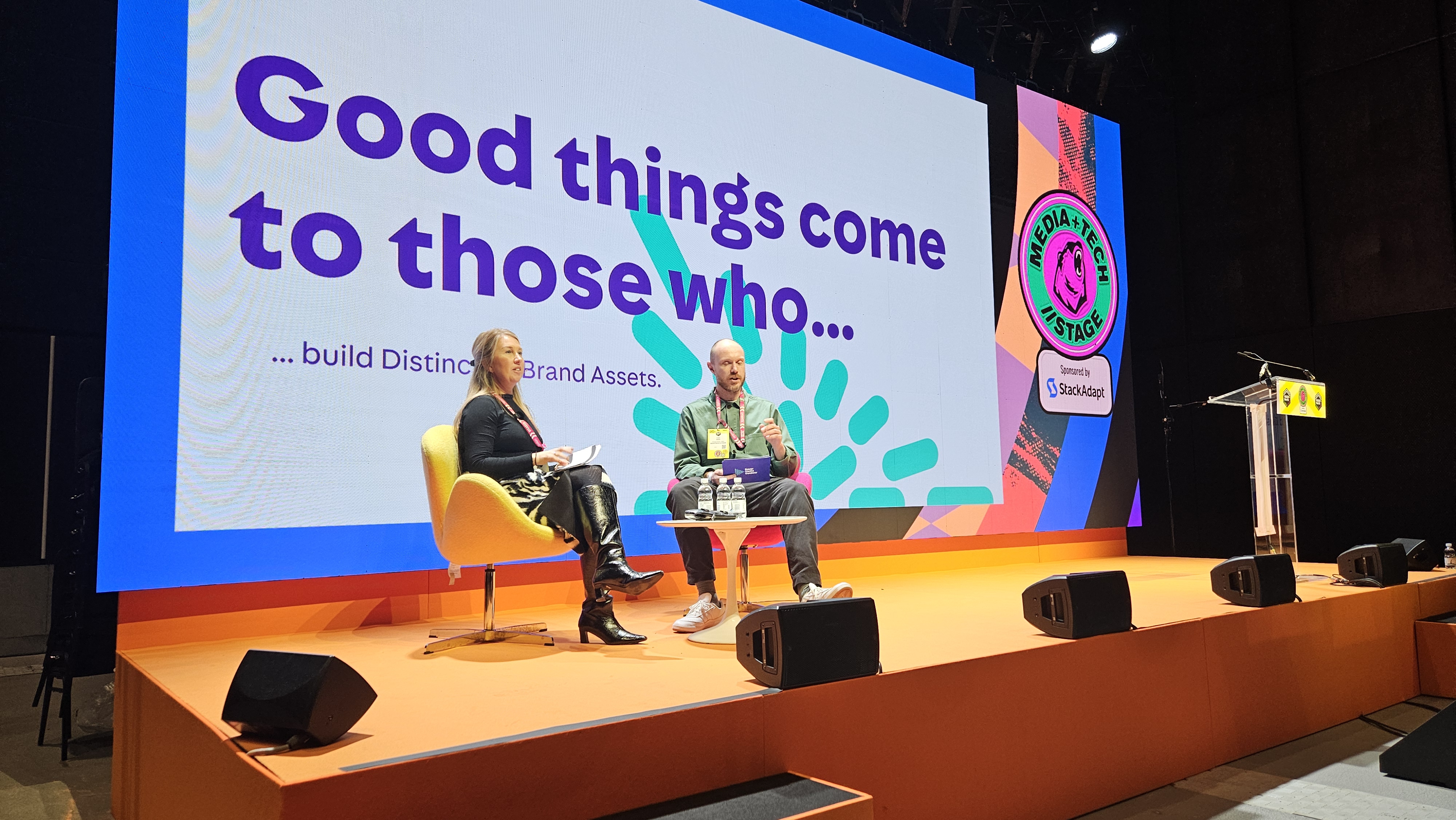
Guinness: mastering distinctive brand assets
Speaking at the event with Colin Horan, BMO’s Strategic Partner for the FMCG category, Deb Caldow described the brand as “a gift to a marketeer”, with more than 260 years of legacy; built around joy, communion and belonging. But even with a brand this strong and distinctive, she emphasised that success comes from discipline: know who you are, and double down on it.
Drawing on the advice of Dolly Parton - “find out who you are, then do it on purpose” - she explained how Guinness applies this to its brand assets: the harp, the pint silhouette, the black-and-white palette. These codes are rigorously tested to ensure consumers genuinely recognise and care about them, not just marketers.
Even more interesting was the brand’s shift toward loosening control. Guinness has increasingly taken cues from how people naturally interact with the product - rituals like “split the G” or the “schlick” left on the glass. These consumer born behaviours gave the team licence to be more playful visually, bringing freshness without losing consistency.
Out of Home remains a powerful channel for Guinness, and Digital Out of Home has elevated the medium further. Deb discussed how DOOH has enabled them to add context to their campaigns - like guiding people to the nearest pub just 300 metres away. Rigorous testing shows that OOH is Guinness’ second‑highest returning media channel, outperforming linear TV.
A final reminder from Guinness: don’t move on too quickly. It takes around 12 exposures to build memory structures. Marketers get bored well before consumers do so it’s important to remember that consistency fuels distinctiveness.
If you’d like to chat through anything from the session or explore how we can support your next campaign, please do get in touch with the team here - we’d love to continue the conversation.


.jpg)